

-
-
-
Application

-
-
-
-
Service
Robots will replace 75 million jobs in the next five years. What jobs will remain safe?
Published Time:
Oct 06,2018
A 2017 McKinsey Global Institute study of 800 occupations across 46 countries found that 800 million jobs could be displaced by automation by 2030. This represents one-fifth of the global workforce. Another one-third of the global workforce would need to be retrained to keep their current jobs. Focusing solely on the impact of automation on US jobs, Oxford University researchers found that 47% of US workers are employed in jobs with a high probability of automation in the next 20 years.
A recent report from the World Economic Forum on September 17 points out that currently humans perform 71% of global work tasks, but by 2025, machines will take on more work than humans. Regarding the upcoming robot apocalypse" rumors, people hold different opinions, as it is highly related to the job market. Robotics and AI technologies are progressing and developing at an astonishing speed. Currently, from construction to finance, some workers have already been replaced by similar mechanized or digital technologies. However, more industries will be affected in the next decade.

A 2017 study by the McKinsey Global Institute, which examined 800 occupations in 46 countries, found that by 2030, 800 million jobs will be replaced by automation. This figure represents one-fifth of the global workforce. If another one-third of the global workforce wishes to keep their current jobs, they will need to retrain. Looking solely at the impact of automation on American jobs, researchers at Oxford University found that 47% of current jobs held by American workers are highly likely to be automated within the next 20 years.
But the good news is that, despite the concerning data mentioned above, they also found that 53% of jobs in the U.S. and four-fifths of jobs globally are unlikely to be affected by advancements in AI and robotics. So, what exactly are these areas? Through conversations with three experts in AI, robotics, and human productivity, here is a list of professions that are unlikely to be replaced by automation in the short term.
Creative Professionals
Tom Pickersgill, founder and CEO of Broadstone, states: "While I believe every job can and will benefit from AI or robotics in some way, in my opinion, some professions can never be replaced by technology." Broadstone is an HR platform that uses AI and machine learning to connect job seekers with some of the UK's largest employers.
One category of jobs located in this safe zone is creative professions, including artists, singers, and musicians. Pickersgill says: "People use their life experiences, emotions, and creativity to turn ideas into reality. Through big data, robots and AI can learn and improve. I don't believe data can create true works of art, nor can it genuinely engage an audience through shared experiences, whether it's a painting, a melody, or a sound."
Maintenance Foreman
Mark Williams says that when a production line is running, problems and bottlenecks are unavoidable—usually, this is not a good thing. But in this scenario, it is precisely these "bad things" that can save human jobs, because the corresponding solutions require human ingenuity. Mark Williams is the Product Lead at People First, a company that runs a software platform dedicated to improving human productivity.
"While machines can assemble faster than anyone, they lack the analytical capabilities, domain expertise, and valuable knowledge needed to solve production problems." Williams also pointed out that while these jobs will be highly skilled, there will also be a certain demand for them.
Hairdresser
Central Research Laboratory is a co-working space and accelerator focused on tech startups. Mat Hunter, the director of the lab, has witnessed startups attempting to create various new technologies, which has given him deep insights into which machine technologies can replace humans and which cannot. At the same time, this has led him to believe that automation is not as suitable for professions like hairdressers as it is for the accounting industry.
Hunter says: "In the past, there have been attempts to create haircutting machines, but aside from mechanically cutting, machines lack the significant flexibility required, which is difficult to automate. In any case, machines are rigid."
Psychotherapists and Social Workers
Pickersgill says another profession unlikely to be replaced by automation is one that helps people heal their minds. "People seek psychotherapists because they need emotional support and guidance. Only through genuine human interaction can those who empathize provide advice based on experience; this cannot be achieved through data-driven logic."
Teachers
Teachers are often called the unsung heroes of society. They are overworked and underpaid, yet they bear one of society's most important tasks: nurturing the growth of young people. It's good news for them that teachers will certainly not be out of a job in the future.
Pickersgill says: "Undoubtedly, the teaching profession will benefit from AI and robotics, but at the same time, I cannot imagine our children being educated by non-humans in the future. Interpersonal skills, empathy, and understanding are crucial for nurturing well-rounded, confident young people, and only humans can ensure this is achieved."
Healthcare Professionals
Williams states that the jobs of doctors and nurses are also highly unlikely to ever be replaced by automation. Without a doubt, automation will better assist doctors and nurses in their treatment, but in fact, robots cannot possess the ability of healthcare professionals to communicate with patients, nor can they feel human understanding.
He added: "In healthcare , healthcare professionals need to build connections with patients through social interaction. But even our most sophisticated robots can only pretend to build relationships or express other forms of emotional intelligence to possibly establish a personal connection with people."
Caregivers
While people might not mind using robots to prepare food or relying on AI to manage their finances, when it comes to caring for children or elderly mothers, this poses a greater demand for robot nannies. Even the most advanced robots today do not have enough physical flexibility to perform the movements required for caregivers to complete their daily tasks.
However, even if robots could be as energetic as humans, putting crying babies to sleep in their arms or helping the elderly change clothes, Pickersgill still believes that automation will not impact the caregiver profession, because humans don't like to be cared for by robots. "People want to be cared for by people. The fundamental reason is loneliness, especially for the elderly, who crave human interaction. Robots, by their nature, can never participate in human interaction. Both emotionally and physically, caregivers are crucial for ensuring well-being, comfort, and mental health." This means that caregivers' jobs will not be replaced by robots in the foreseeable future.
While the professions listed above are not exhaustive, they do analyze the common qualities of some occupations that are temporarily unaffected by automation. These professions emphasize certain human abilities: the understanding of human capabilities is essential (e.g., artists, therapists, and social workers), the ability to adapt to nuances and unforeseen changes (e.g., hairdressers and maintenance foremen), and the ability to connect and empathize with people (e.g., teachers and healthcare professionals). Before AI and robots can replicate these qualities, those looking for job security in the future might consider the aforementioned or similar professions.

Employee Retraining
Through a survey of Chief Human Resource Officers and Chief Strategy Officers from companies across 12 industries and 20 developed and emerging economies (representing 70% of global GDP), the report found that 54% of large companies' employees require effective skills retraining to fully grasp the growth opportunities presented by the Fourth Industrial Revolution. Meanwhile, slightly more than half of the surveyed companies indicated plans to provide skills retraining for employees in key positions, while only one-third of companies plan to retrain employees at risk.
Among the companies surveyed, respondents projected a net reduction of approximately 984,000 jobs from the present to 2022, with 1.74 million new jobs added. Across the 20 economies covered in the report, extrapolations of these trends among large companies' non-agricultural employees suggest that 75 million jobs may be displaced as the division of labor between humans, machines, and algorithms changes, while 133 million new jobs better suited to the new division of labor are expected to be created.
BLOGS
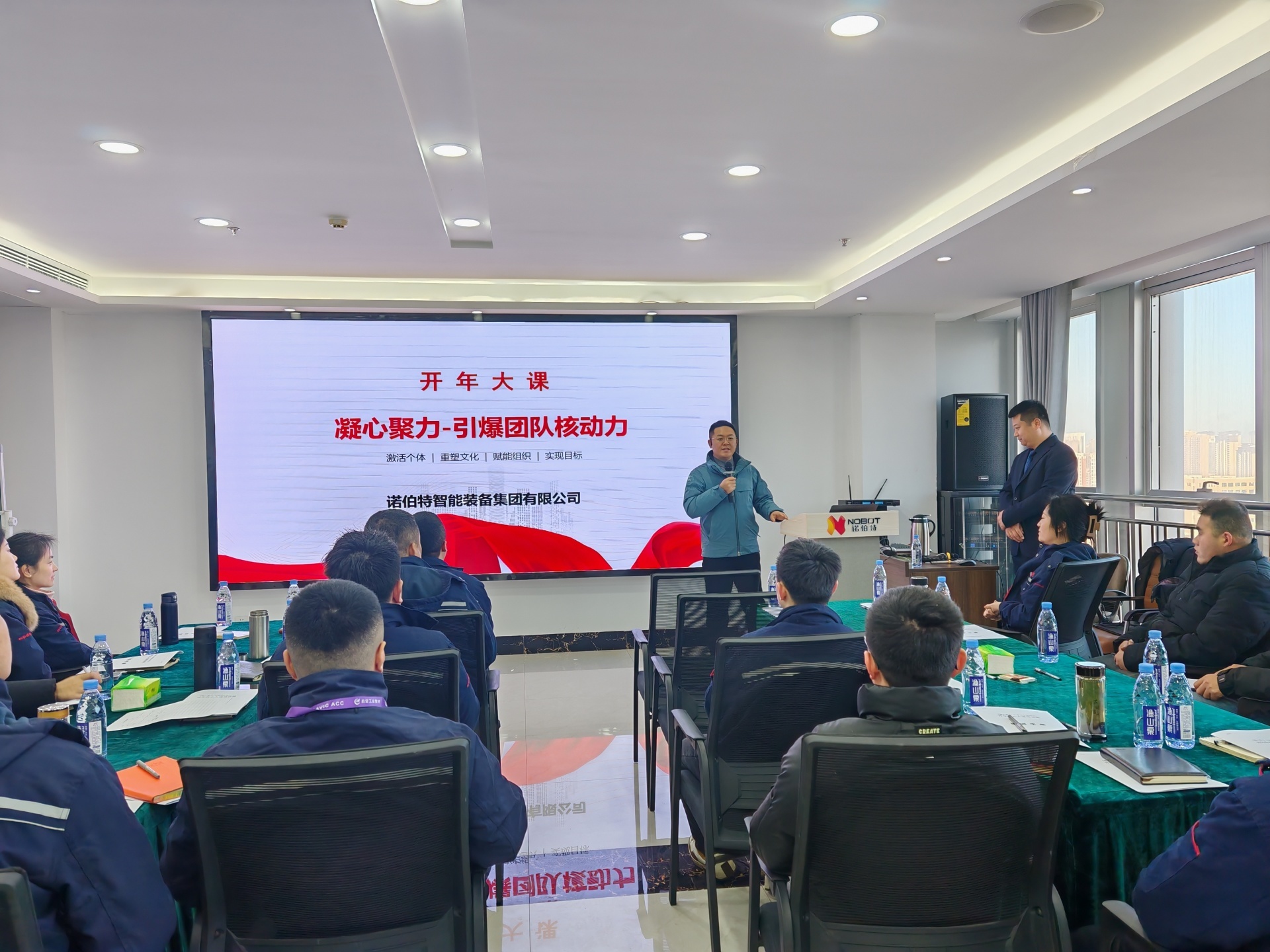
Nobot Group's 2025 Kick-off Event: A Team Building Activity Focused on Unity and Power
This opening ceremony was both a knowledge-boosting session, allowing employees to continuously grow through learning, and a team-building event, bringing everyone closer together. It impressed upon each employee that in today's increasingly competitive market, only by continuously learning new knowledge, daring to innovate, and maintaining teamwork can we remain undefeated. With the collective efforts of all employees, Nobot will surely ride the waves and achieve even greater success on this new journey, steadily advancing towards higher goals!
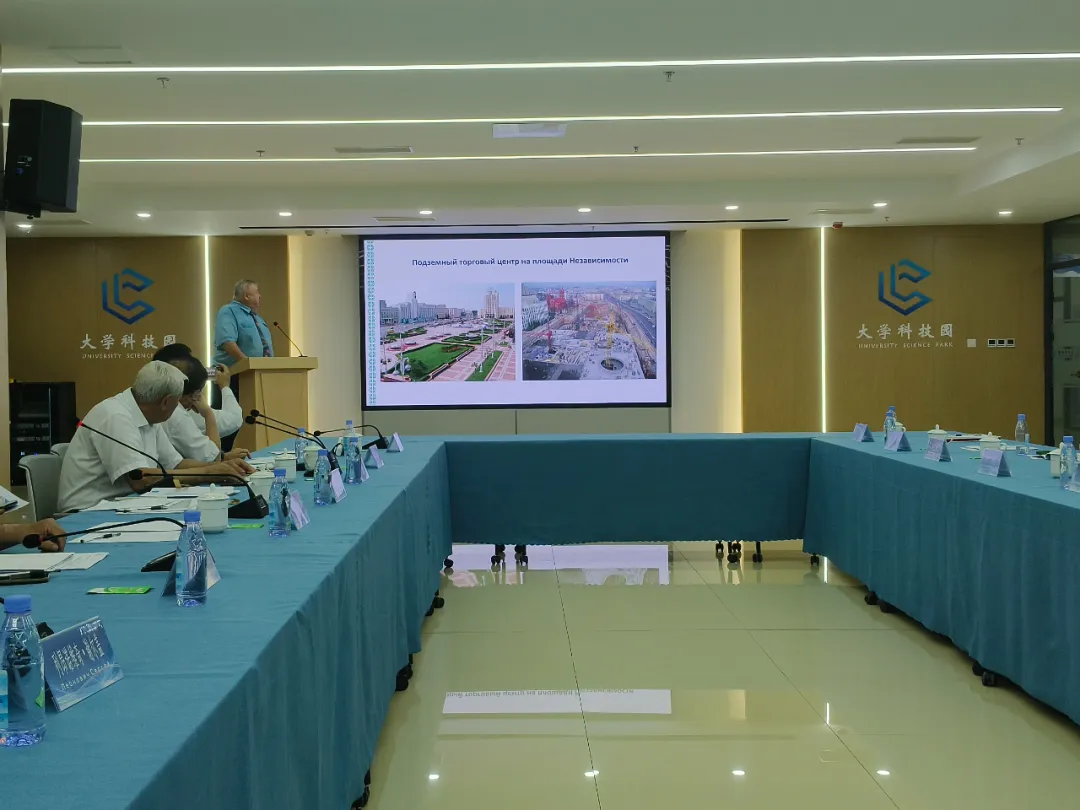
Nobot was invited to attend the Belt and Road International Exchange Conference
On July 28, 2024, the 2024 Liaocheng "Belt and Road" International Exchange Conference and the Unveiling Ceremony of the Central Asia International High-end Talent Joint Training Base were held in the Liaocheng High-tech Zone University Science and Technology Park. Professor Tursunbayev Zaporotot, President of Osh Technological University of the Kyrgyz Republic and corresponding academician of the Kyrgyz Academy of Engineering, and Academician Smaylor Erta of the Kyrgyz Academy of Engineering and the Russian Academy of Natural Sciences, among other experts and scholars from "Belt and Road" countries, participated in the event. Liaocheng Deputy Mayor Wang Gang and Zhang Ya, Party Secretary and Director of the Management Committee of the High-tech Zone, attended the event and delivered speeches.
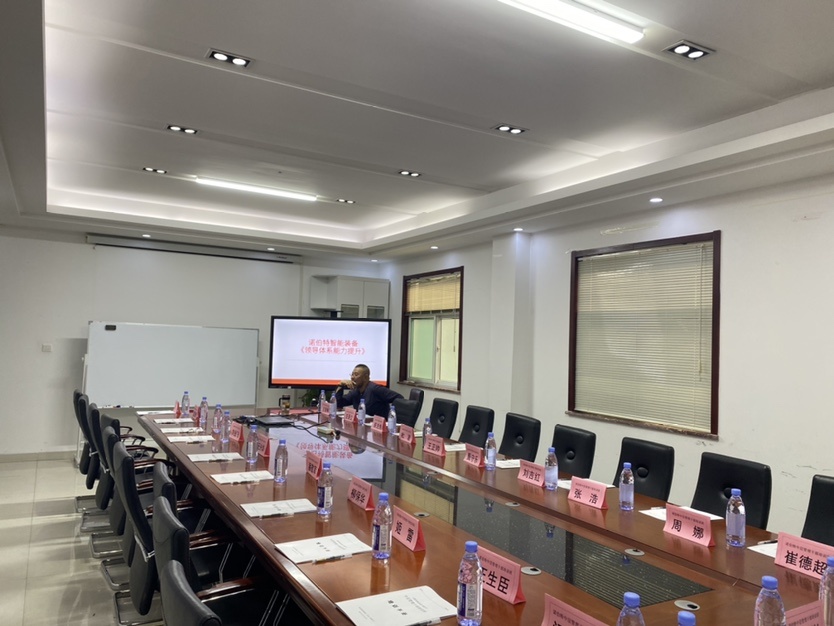
This training event not only provided a valuable learning opportunity for company managers and key personnel, but also built a platform for communication and sharing. During the training, everyone actively interacted and discussed enthusiastically, exploring effective ways to improve management capabilities together. Through this training, everyone has gained rich knowledge and skills, but more importantly, it has inspired confidence and motivation for the future.
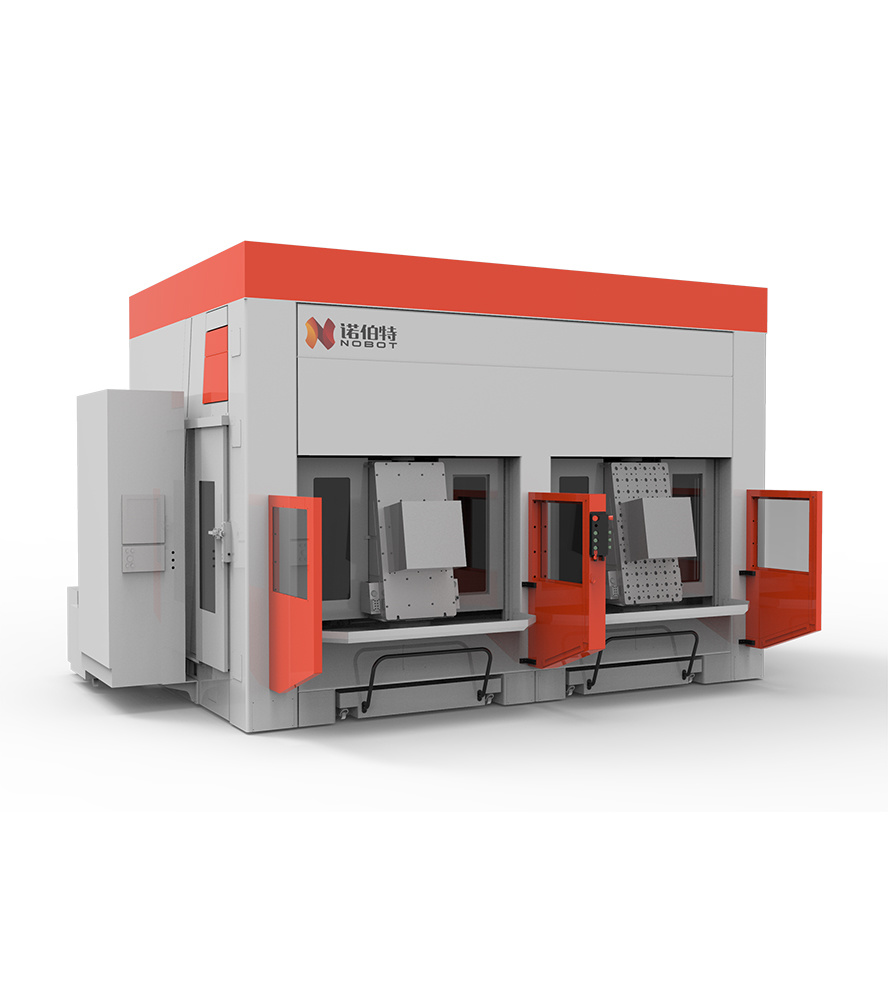
How to use a five-axis machining center efficiently? Today, let's learn a few practical steps!
When using a five-axis machining center, the equipment must first be adjusted to ensure that the workpiece and fixture dimensions precisely match, and that the zero points of each axis are accurately adjusted.
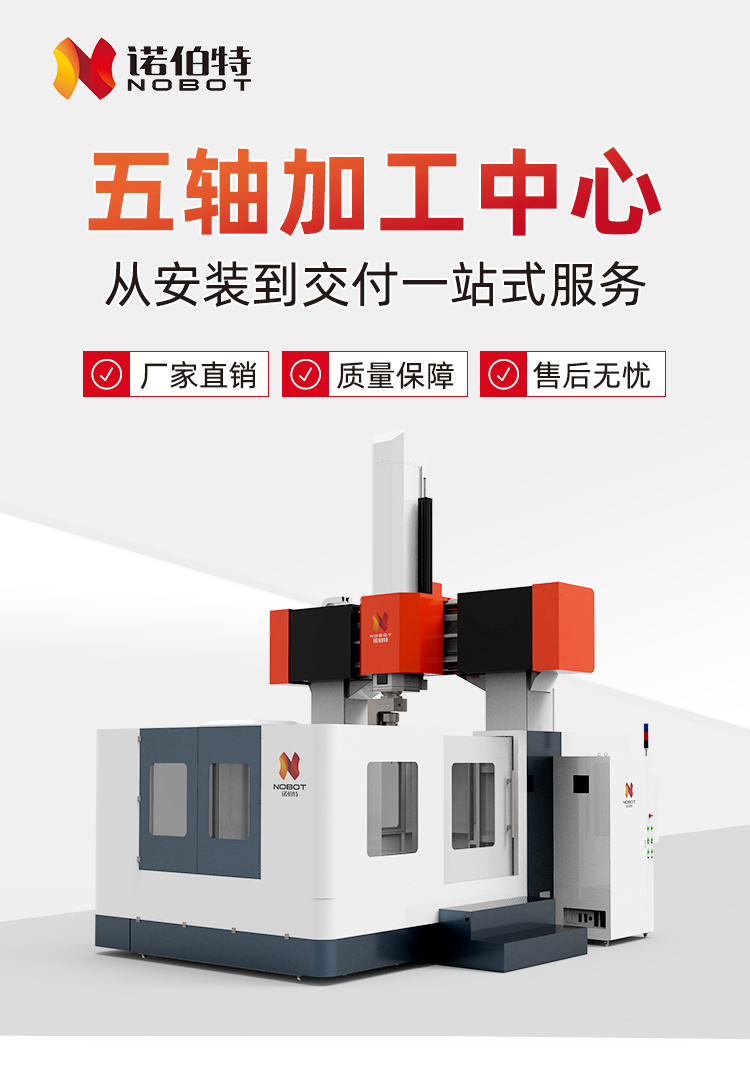
Why do composite materials require 5-axis CNC machining?
Composite materials are widely used in various fields such as aerospace, automotive, construction, energy, energy storage, infrastructure, marine, pipelines and tanks, sports and entertainment, and transportation due to their light weight, high fatigue resistance, and strong fracture resistance. Among them, aerospace and automotive industries are the largest application markets for composite materials. Five-axis CNC plays an important role in the processing of composite materials. Why do composite materials need to be processed using five-axis CNC?
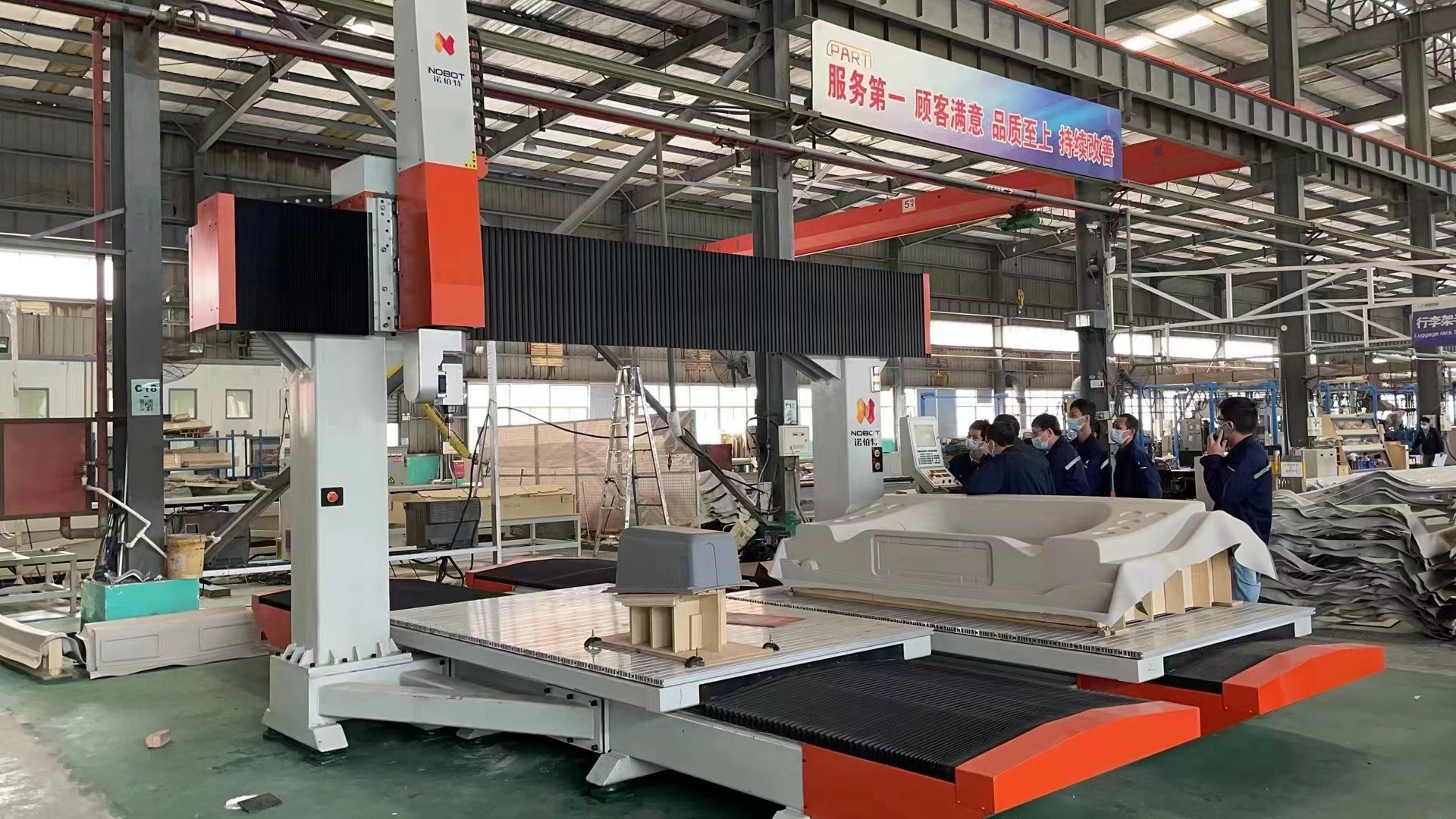
Dual-station five-axis machines offer several significant advantages. First, while one station is being machined, the other can be used for material loading and unloading, ensuring continuous, non-stop machining and significantly improving production efficiency. Second, the dual-station design makes operation more convenient and reduces waiting time. However, dual-station five-axis machines typically cost more than single-station machines and may require more operating and maintenance space.
Nobot Intelligent Equipment Group Co., Ltd.
Pre-sales consultation:86-635-2932233
Fax:86-635-2945333
After-sales consultation:86-635-5086881 / 86-635-2936881
National unified service hotline:86-400-823-3356
Email:nuobote@nobot.cc
Address: No. 1 Plant, No. 88 Huanghe Road, Gaoxin District, Liaocheng City, Shandong Province

copyright © 2025 Nobot Intelligent Equipment Group Co., Ltd.