

-
-
-
Application

-
-
-
-
Service
Nobot Robot Knowledge Lecture Hall - A Summary of Basic Industrial Robot Knowledge
Published Time:
Sep 26,2018
Some believe that the application of robots is merely to save labor, and that China is rich in labor resources, so developing robots is not necessarily in line with China's national conditions. In fact, this is a misunderstanding. In China, the superiority of the socialist system determines that robots can fully exert their advantages. They will not only bring high productivity and huge economic benefits to China's economic construction, but also make outstanding contributions to the development of emerging fields such as space exploration, ocean development, and nuclear energy utilization.
Some believe that the application of robots is merely to save labor, and that China is rich in labor resources, so developing robots may not be in line with China's national conditions. This is actually a misunderstanding. In China, the superiority of the socialist system determines that robots can fully exert their advantages. They can not only bring high productivity and huge economic benefits to China's economic construction, but also make outstanding contributions to the development of emerging fields such as space exploration, ocean development, and nuclear energy utilization.
China's robotics research started late, but progressed rapidly. It has already achieved significant accomplishments in industrial robots, special robots, and intelligent robots, laying a solid foundation for the development of robotics in China.

Definition of Robots
The definition of the US National Bureau of Standards (NBS): "A robot is a mechanical device that can be programmed and performs certain operations and mobile tasks under automatic control."
The definition of the International Organization for Standardization (ISO): "A robot is an automatic, position-controllable, programmable multifunctional manipulator, which has several axes and can handle various materials, parts, tools, and special devices through programmable operations to perform various tasks."
Robots have the following characteristics:
(1) A mechatronics device;
(2) Actions have functions similar to those of humans or other organisms;
(3) Can perform various tasks through programming, with a certain degree of universality and flexibility;
(4) Has a certain degree of intelligence and can autonomously complete some operations.
Classification of Robots
According to the standards of the Japan Industrial Robot Association (JIRA), robots can be divided into six categories:
Category 1: Manually operated robots. A multi-degree-of-freedom device operated by an operator;
Category 2: Fixed-sequence robots. Equipment that performs tasks step by step in a predetermined and unchanging manner, whose execution sequence is difficult to modify;
Category 3: Variable-sequence robots. Same as Category 2, but its sequence is easy to modify.
Category 4: Playback robots. The operator guides the robot to manually perform tasks, records these actions, and then reproduces them by the robot, that is, the robot repeats the same actions according to the recorded information.
Category 5: Numerically controlled robots. The operator provides the robot with a motion program, rather than manually teaching it to perform tasks.
Category 6: Intelligent robots. Robots have the ability to perceive the external environment, and can successfully complete tasks even if their working environment changes.
The Robotic Industries Association (RIA) only considers categories 3 to 6 above as robots.
China's robotics experts, starting from the application environment, divide robots into two categories: industrial robots and special robots. Industrial robots are multi-joint manipulators or multi-degree-of-freedom robots oriented to the industrial field. Special robots are various advanced robots used in non-manufacturing industries and serving mankind, excluding industrial robots.
Research areas involved in robotics technology include:
1. Sensor technology: Obtaining sensor technology similar to human sensory functions;
2. Artificial intelligence and computer science: Obtaining artificial intelligence or computer science with capabilities similar to human intelligence or control functions;
3. Prosthetic technology;
4. Industrial robot technology: Industrial robot technology that embodies human operational skills;
5. Mobile machinery technology: Walking technology that realizes animal walking functions;
6. Biological functions: Biological technology aimed at realizing biological functions.
In order to prevent robots from harming humans, science fiction writer Isaac Asimov proposed the "Three Laws of Robotics" in 1940:
(1) A robot may not injure a human being or, through inaction, allow a human being to come to harm;
(2) A robot must obey the orders given it by human beings except where such orders would conflict with the First Law;
(3) A robot must protect its own existence as long as such protection does not conflict with the First or Second Law.
This is an ethical guideline given to robots. The robotics academic community has always used these three principles as guidelines for robot development.
In 1959, the first industrial robot (using a programmable controller and a cylindrical coordinate manipulator) was born in the United States, ushering in a new era for robot development.
Basic Content of Robot Research
1. Spatial kinematics
Design of robot body and arm mechanisms, design of robot hand mechanisms, design of robot walking mechanisms, design of robot joint mechanisms.
2. Robot kinematics
The research involves the mutual relationship between the various components of this system and between the system and the object. For this purpose, an effective mathematical description method is needed.
3. Robot statics
Statics mainly discusses the relationship between the force at the end point of the robot hand and the input torque of the driver.
4. Robot dynamics
The dynamic equation refers to the equation of the relationship between the force or torque acting on each mechanism of the robot and its position, velocity, and acceleration.
5. Robot control technology
The main research content includes robot control methods and robot control strategies.
6. Robot sensors
The robot's senses are mainly realized through sensors. External sensors include visual, tactile, auditory, and force sensors, while internal sensors mainly include position, attitude, speed, and acceleration sensors.
7. Robot language
Robot languages are divided into general-purpose computer languages and special-purpose robot languages,
Composition of Robots
1. Mechanical part;
2. Sensor(s);
3. Controller;
4. Drive source.
Classification of Robots
According to the control type of the robot, it is divided into:
(1) Non-servo robots;
(2) Servo-controlled robots can be further divided into point-to-point servo control and continuous path servo control.
Classification by robot structure coordinate system characteristics
(1) Cartesian robot;
(2) Cylindrical coordinate robot;
(3) Polar coordinate robot;
(4) Articulated robot.

Basic Content of Robot Research
1. Spatial kinematics
Design of robot body and arm mechanisms, design of robot hand mechanisms, design of robot walking mechanisms, design of robot joint mechanisms.
2. Robot kinematics
The research involves the mutual relationship between the various components of this system and between the system and the object. For this purpose, an effective mathematical description method is needed.
3. Robot statics
Statics mainly discusses the relationship between the force at the end point of the robot hand and the input torque of the driver.
4. Robot dynamics
The dynamic equation refers to the equation of the relationship between the force or torque acting on each mechanism of the robot and its position, velocity, and acceleration.
5. Robot control technology
The main research content includes robot control methods and robot control strategies.
6. Robot sensors
The robot's senses are mainly realized through sensors. External sensors include visual, tactile, auditory, and force sensors, while internal sensors mainly include position, attitude, speed, and acceleration sensors.
7. Robot language
Robot languages are divided into general-purpose computer languages and special-purpose robot languages,
Composition of Robots
1. Mechanical part;
2. Sensor(s);
3. Controller;
4. Drive source.
Classification of Robots
According to the control type of the robot, it is divided into:
(1) Non-servo robots;
(2) Servo-controlled robots can be further divided into point-to-point servo control and continuous path servo control.
Classification by robot structure coordinate system characteristics
(1) Cartesian robot;
(2) Cylindrical coordinate robot;
(3) Polar coordinate robot;
(4) Articulated robot.
Main technical parameters of the robot
1. Degrees of freedom 2. Workspace 3. Working speed 4. Payload 5. Control method 6. Drive method 7. Accuracy, repeatability and resolution
Composition of robot mechanical structure
1. Hand
In order to perform operations, the robot is equipped with an operating mechanism on the wrist, sometimes also called a gripper or end effector.
2. Wrist
The part connecting the hand and the arm, its main function is to change the spatial direction of the hand and transfer the operating load to the arm.
3. Arm
The part connecting the body and the wrist, its main function is to change the spatial position of the hand, meet the robot's working space, and transfer various loads to the base.
4. Body
The base part of the robot, which plays a supporting role. For fixed robots, it is directly connected to the ground base, while for mobile robots, it is installed on the mobile mechanism.
Common body structures:
1) Lifting and turning body structure 2) Pitching body structure 3) Straight moving body structure 4) Humanoid robot body structure
Robot mechanism movement
1. Arm movement
1. Vertical movement 2. Radial movement 3. Rotary movement
2. Wrist movement
(1) Wrist rotation (2) Wrist bending (3) Wrist swing
The wrist is a structural component connecting the arm and the hand, and its main function is to determine the operating direction of the hand. Therefore, it has independent degrees of freedom to meet the complex posture of the robot hand.
To determine the operating direction of the hand, three degrees of freedom are generally required, and the three rotation directions are:
1) Arm rotation Rotation around the forearm axis.
2) Hand rotation The hand rotates around its own axis.
3) Wrist swing The hand swings relative to the arm.
The robot's hand is the most important actuator. In terms of function and form, it can be divided into the hand of an industrial robot and the hand of a humanoid robot.
Commonly used hands can be divided into two categories according to their gripping principle: clamping type and adsorption type.
Walking mechanism
The walking mechanism is an important actuator of the walking robot, which consists of a driving device, a transmission mechanism, a position detection element, a sensor, a cable and a pipeline. On the one hand, it supports the body, arm and hand of the robot, and on the other hand, it drives the robot to move in a wider space according to the requirements of the work task.
Generally speaking, the walking mechanisms of walking robots mainly include wheeled walking mechanisms, tracked walking mechanisms and legged walking mechanisms. In addition, there are also non-entry walking mechanisms, peristaltic walking mechanisms, hybrid walking mechanisms and serpentine walking mechanisms, etc., to suit various special occasions.
Although the tracked walking mechanism can move on uneven ground, its adaptability is insufficient, the shaking is too large during walking, and the movement efficiency is low on soft ground.
Legged walking has a good adaptability to rough roads, the foothold of legged movement is discrete points, the optimal support point can be selected on the reachable ground, while wheeled and tracked walking tools must face almost all points on the worst terrain; legged movement also has active vibration isolation ability, although the ground is uneven, the movement of the body can still be quite stable; legged walking has a higher speed and lower energy consumption on uneven and soft ground.
Robot joint drive methods:
1. Hydraulic drive 2. Pneumatic 3. Electric
Degrees of freedom: The number of independent movements of an object relative to a coordinate system is called degrees of freedom (DOF, degree of freedom).
A rigid body has 6 degrees of freedom
Three rotational degrees of freedom R1, R2, R3
Three translational degrees of freedom T1, T2, T3

Research object
Robots are divided into two types in terms of mechanism form: one is a jointed serial robot, and the other is a parallel robot.
These two robots are different:
Serial robot: large workspace, flexible, poor rigidity, small load, error accumulation and amplification.
Parallel robot: good rigidity, large load, no error accumulation, small workspace, small attitude range.
Usually, the forward kinematics of serial mechanisms is simple, and the inverse kinematics is complex; the forward kinematics of parallel mechanisms is complex (multiple solutions), and the inverse kinematics is simple.
Common robot kinematics problems can be summarized as follows:
1. For a given robot, the position and posture of the robot end-effector relative to the reference coordinate system are obtained from the known link geometric parameters and joint angle vector.
2. Given the geometric parameters of the robot links, and given the desired position and posture (pose) of the robot end-effector relative to the reference coordinate system, can the robot make its end-effector reach this expected pose? If so, how many different forms of the robot can satisfy the same condition?
We introduce vectors to represent the hand position and joint variables respectively,
Therefore, let's use the above two vectors to describe the kinematics of this 2-DOF robot.
The components of the hand position can be expressed geometrically as:
Supplementary knowledge of coordinate transformation:
Rotation transformations around the x, y, and z axes respectively (basic rotation transformations);
Composite transformation: Translation and rotation constitute a composite transformation.
The so-called robot planning refers to the process by which a robot obtains a solution to complete a task based on its own task. The task mentioned here has a broad concept, which can refer to a specific task to be completed by the robot, or a certain action of the robot, such as a specified movement of the hand or joint, etc.
In order to achieve each action, it is necessary to specify the trajectory of the hand movement, which is hand trajectory planning.
In order for the hand to achieve the predetermined movement, it is necessary to know the motion law of each joint, which is joint trajectory planning.
Finally, there is joint motion control.
Robot planning is hierarchical, from high-level task planning, motion planning to hand trajectory planning and joint trajectory planning, and finally the bottom-level control. The magnitude of the force also needs to be controlled. At this time, in addition to the trajectory planning of the hand or joint, the planning of the hand and joint output force is also required.
The higher the level of intelligence, the more levels of planning, and the simpler the operation.
For industrial robots, high-level task planning and motion planning are generally done by humans. And general industrial robots do not have force feedback, so industrial robots usually only have trajectory planning and low-level control functions.
Robot planning is divided into high-level planning and low-level planning. Automatic planning is called high-level planning in robot planning. Without special instructions, robot planning refers to automatic planning. Automatic planning is an important problem-solving technique. Starting from a specific problem state, it seeks a series of actions and establishes an operation sequence until the target state is obtained. Compared with general problem-solving, automatic planning pays more attention to the problem-solving process rather than the result.
Planning refers to the description of the action process required by the robot to achieve the goal. The planning content may not be ordered, but generally speaking, the planning has an implicit ordering of a certain planning goal.
Task planning has three stages: model building, task description, and manipulator program synthesis. The world model of the task should contain the following information: (1) geometric description of all objects in the task environment and the robot; (2) physical description of all objects; (3) kinematic description of all connecting pieces, (4) description of robot and sensor characteristics. In the world model, the task state model must also include the layout of all objects and connecting pieces.
The purpose of trajectory planning is to transform the simple task description input by the operator into a detailed motion trajectory description.
There are three advantages to planning in joint variable space:
1. Directly plan the trajectory using the controlled variables during movement; 2. Trajectory planning can be carried out in near real time; 3. Joint trajectories are easy to plan.
The accompanying disadvantage is that it is difficult to determine the position of each link and the hand during movement, but in order to avoid obstacles on the trajectory, it is often required to know the position of some links and the hand.
Constraints on planning joint interpolation trajectories:
(Initial position) 1. Position (given) 2. Velocity (given, usually zero) 3. Acceleration (given, usually zero) (Intermediate position) 4. Lifting point position (given) 5. Lifting point position (continuous with the previous trajectory) 6. Velocity (continuous with the previous trajectory) 7. Acceleration (continuous with the previous trajectory) 8. Lowering point position (given) 9. Lowering point position (continuous with the previous trajectory) 10. Velocity (continuous with the previous trajectory) 11. Acceleration (continuous with the previous trajectory)
(Termination position) 12. Position (given) 13. Velocity (given, usually zero) 14. Acceleration (given, usually zero)
The main methods for planning in Cartesian space are linear function interpolation and circular arc interpolation.
Offline path planning is path planning based on complete prior information about the environment. Complete prior information is only applicable to static environments, in which case the path is planned offline; online path planning is path planning based on uncertain environments with sensor information. In this case, the path must be planned online.
While performing operations, the robot continuously senses the surrounding working environment and its own activities using sensors, and through continuous sensing, information feedback, and correction, it ensures reliable implementation of the desired operation.
The role of sensors:
1. It is a necessary way to receive external information; 2. It works with the microprocessor (some sensors themselves integrate microprocessors); 3. It constitutes a necessary link in the feedback.
Classification of robot sensors
Robot sensors can also be divided into internal sensors and external sensors.
Internal sensors are used to determine the posture and position of the robot in its own coordinate system, such as general-purpose sensors used to measure displacement, velocity, acceleration, and stress.
External sensors are used for the robot's own positioning relative to its surrounding environment. The use of external sensor mechanisms allows the robot to interact with its environment in a flexible way. It is responsible for checking variables such as distance, proximity, and contact, facilitating robot guidance and object recognition and handling.

(Use):
Internal sensors: Sensors that detect the state of the robot itself (joint displacement, angle between arms, etc.). Control detection
External sensors: Sensors that detect the environment in which the robot is located (what object it is, how far it is from the object, etc.) and the situation (the grasped object slips, etc.).
External sensors are divided into end-effector sensors and environmental sensors.
End-effector sensors: mainly installed on the hand as the end-effector, detecting and processing sensory information for delicate operations. Equivalent to tactile sense.
Environmental sensors: Used to identify objects and detect the distance between objects and robots, for positioning and environmental awareness. Equivalent to vision.
Purpose of robot movement:
①To achieve "replacing humans" ②To carry objects ③To adapt to the environment and perform more tasks
Mobile robots in the field of environmental preparation
1) Mobile environment on rails (1D) Track robots
2) Mobile environment on roads (2D) Driverless transport vehicles
Mobile robots without a prepared environment
1) Natural environment
①Terrestrial 2D and 3D environments
②Marine and underwater environments
③Air and space environments
2) Artificially created environments
①Indoor and outdoor environments of terrestrial buildings (stairs, elevators, wires), gaps, ditches, stepping stones
②Marine and underwater concrete structures, etc.
Bipedal robot mechanism
The misalignment between the target ZMP and the ground reaction force center point is the main reason for losing balance. If the Honda robot loses balance and may fall:
Ground reaction force control: The soles of the feet must be able to adapt to uneven ground, while also being able to stand stably.
Target ZMP control: When ASIMO is unable to stand due to various reasons and begins to tilt, it is necessary to control its upper limbs to move in the opposite direction to control the impending fall, while also increasing the walking speed to balance the body.
Foot placement control: When target ZMP control is activated, ASIMO needs to adjust the distance of each step to meet the relationship between the body's position, speed, and step length at that time.
Movement detection: 1. Position detection 2. Orientation detection 3. Self-reliance detection
Guidance methods
1) Path guidance method: Path given, hoping to move along the given path
2) Autonomous guidance method: Autonomous path planning, completing path cruising
Usually, an evaluation criterion function must first be established: obstacle avoidance; task objectives; shortest path; most economical path; multi-robot coordinated work, etc...

BLOGS
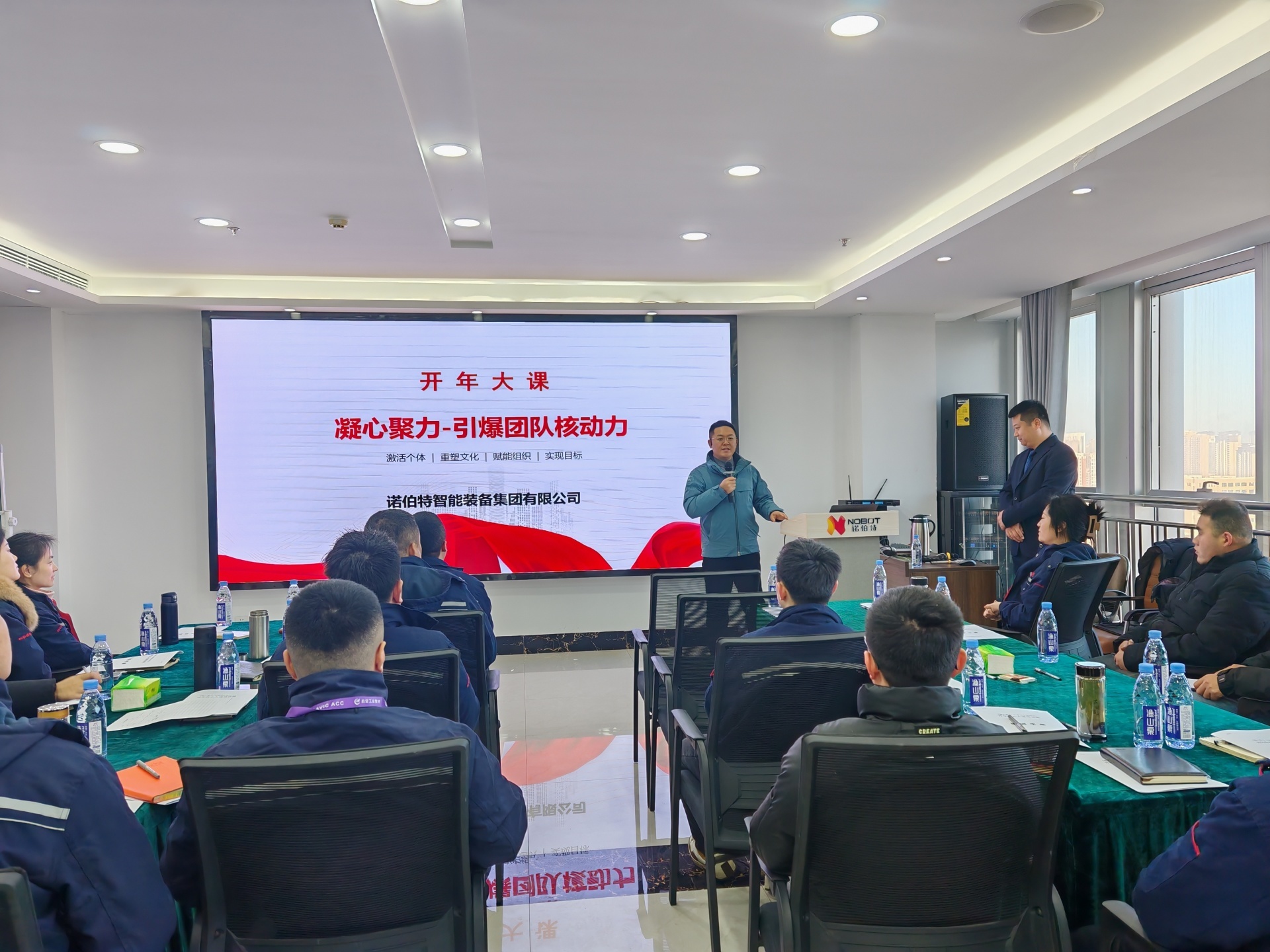
Nobot Group's 2025 Kick-off Event: A Team Building Activity Focused on Unity and Power
This opening ceremony was both a knowledge-boosting session, allowing employees to continuously grow through learning, and a team-building event, bringing everyone closer together. It impressed upon each employee that in today's increasingly competitive market, only by continuously learning new knowledge, daring to innovate, and maintaining teamwork can we remain undefeated. With the collective efforts of all employees, Nobot will surely ride the waves and achieve even greater success on this new journey, steadily advancing towards higher goals!
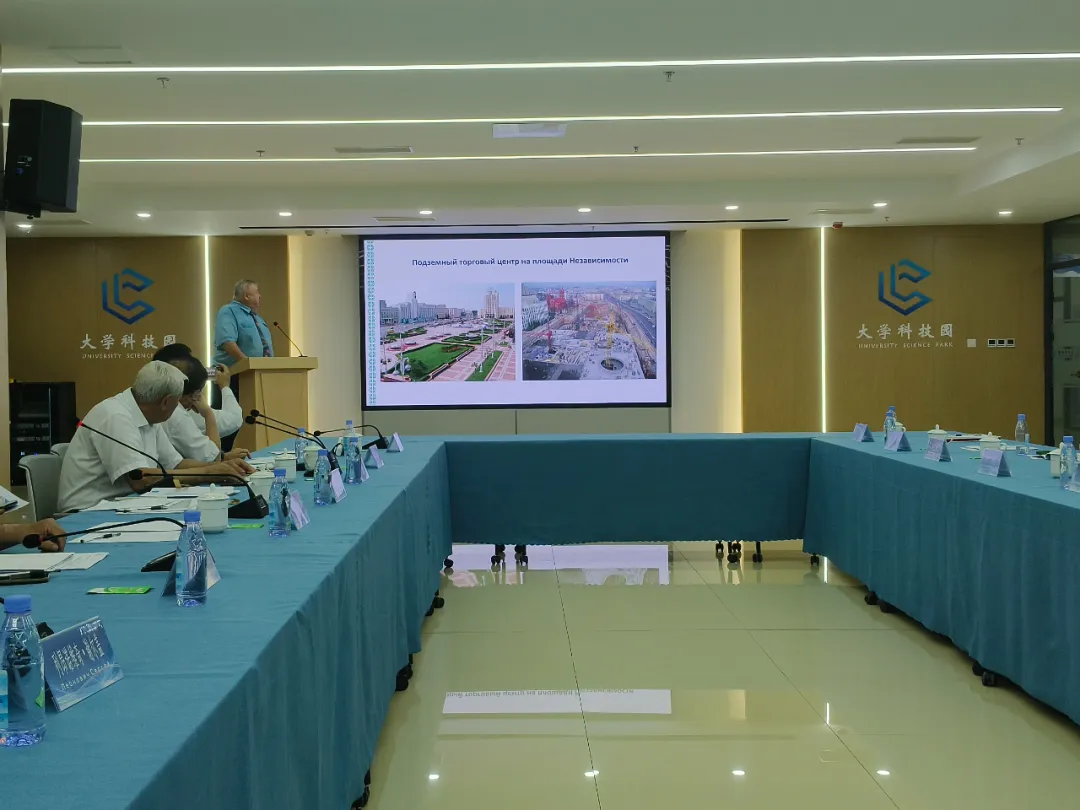
Nobot was invited to attend the Belt and Road International Exchange Conference
On July 28, 2024, the 2024 Liaocheng "Belt and Road" International Exchange Conference and the Unveiling Ceremony of the Central Asia International High-end Talent Joint Training Base were held in the Liaocheng High-tech Zone University Science and Technology Park. Professor Tursunbayev Zaporotot, President of Osh Technological University of the Kyrgyz Republic and corresponding academician of the Kyrgyz Academy of Engineering, and Academician Smaylor Erta of the Kyrgyz Academy of Engineering and the Russian Academy of Natural Sciences, among other experts and scholars from "Belt and Road" countries, participated in the event. Liaocheng Deputy Mayor Wang Gang and Zhang Ya, Party Secretary and Director of the Management Committee of the High-tech Zone, attended the event and delivered speeches.
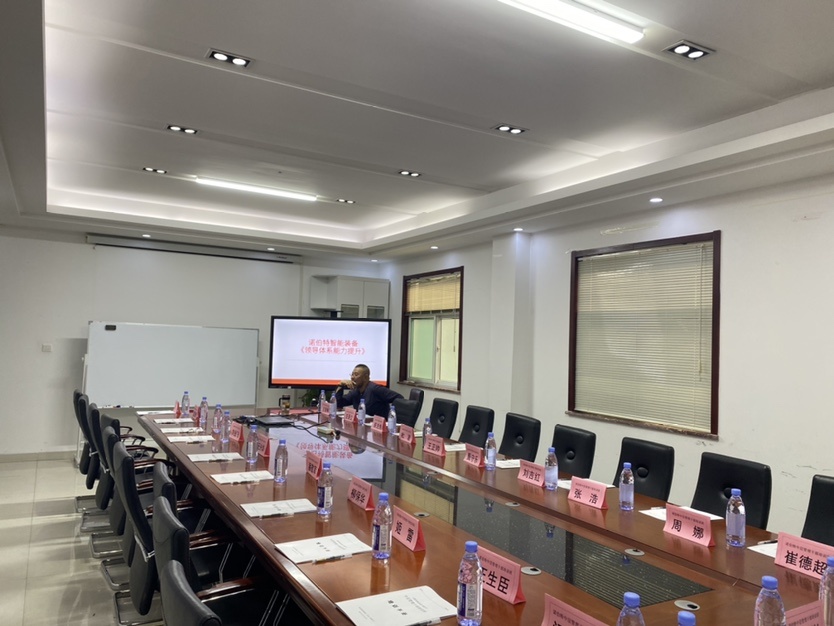
This training event not only provided a valuable learning opportunity for company managers and key personnel, but also built a platform for communication and sharing. During the training, everyone actively interacted and discussed enthusiastically, exploring effective ways to improve management capabilities together. Through this training, everyone has gained rich knowledge and skills, but more importantly, it has inspired confidence and motivation for the future.
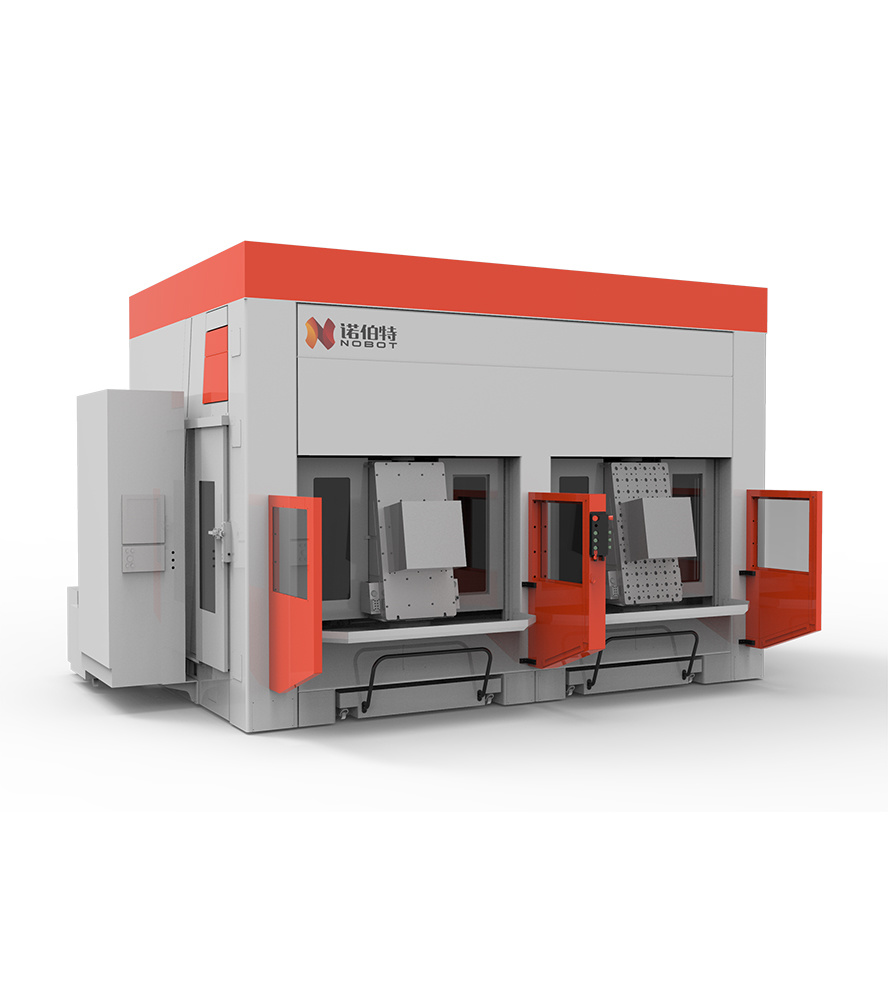
How to use a five-axis machining center efficiently? Today, let's learn a few practical steps!
When using a five-axis machining center, the equipment must first be adjusted to ensure that the workpiece and fixture dimensions precisely match, and that the zero points of each axis are accurately adjusted.
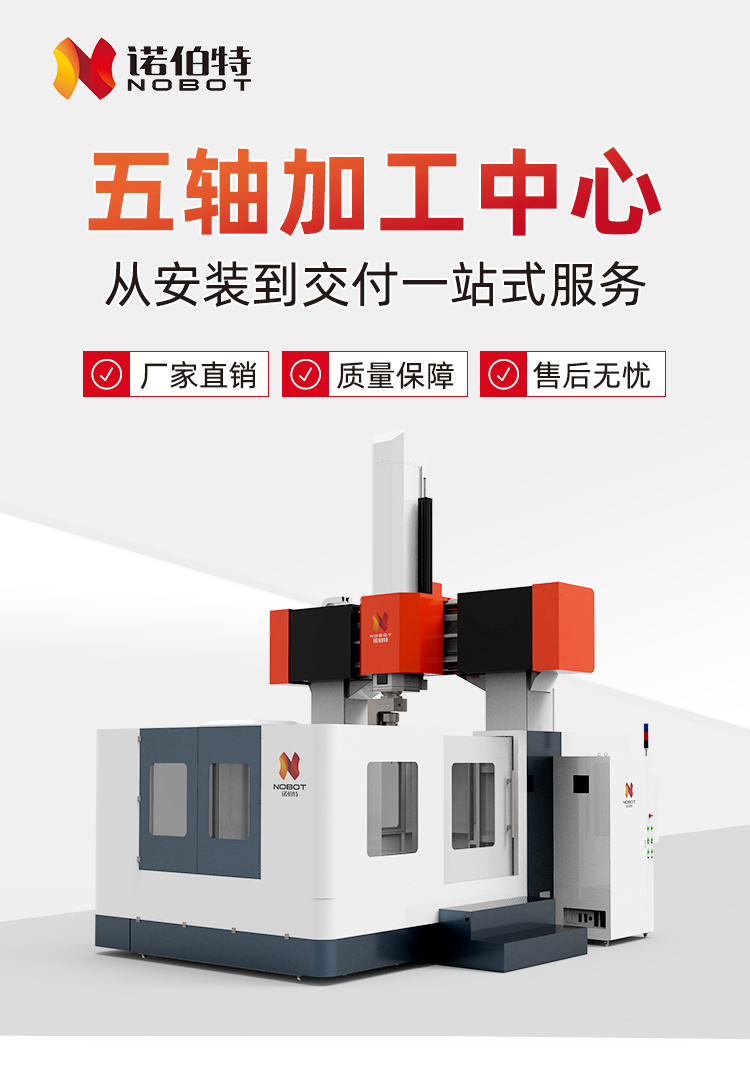
Why do composite materials require 5-axis CNC machining?
Composite materials are widely used in various fields such as aerospace, automotive, construction, energy, energy storage, infrastructure, marine, pipelines and tanks, sports and entertainment, and transportation due to their light weight, high fatigue resistance, and strong fracture resistance. Among them, aerospace and automotive industries are the largest application markets for composite materials. Five-axis CNC plays an important role in the processing of composite materials. Why do composite materials need to be processed using five-axis CNC?
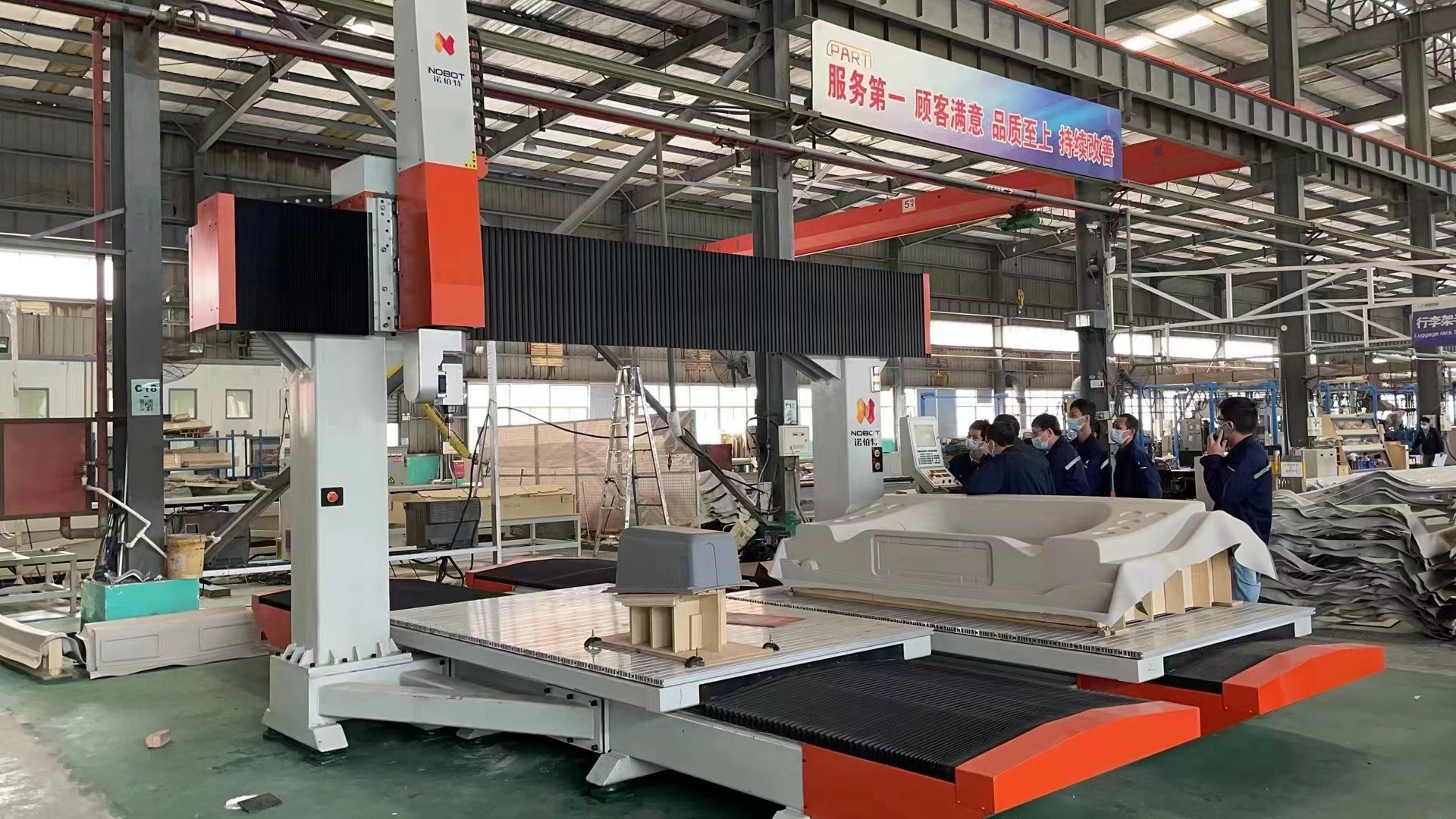
Dual-station five-axis machines offer several significant advantages. First, while one station is being machined, the other can be used for material loading and unloading, ensuring continuous, non-stop machining and significantly improving production efficiency. Second, the dual-station design makes operation more convenient and reduces waiting time. However, dual-station five-axis machines typically cost more than single-station machines and may require more operating and maintenance space.
Nobot Intelligent Equipment Group Co., Ltd.
Pre-sales consultation:86-635-2932233
Fax:86-635-2945333
After-sales consultation:86-635-5086881 / 86-635-2936881
National unified service hotline:86-400-823-3356
Email:nuobote@nobot.cc
Address: No. 1 Plant, No. 88 Huanghe Road, Gaoxin District, Liaocheng City, Shandong Province

copyright © 2025 Nobot Intelligent Equipment Group Co., Ltd.