

-
-
-
Application

-
-
-
-
Service
How to combine industrial robots and CNC machine tools
Published Time:
Mar 17,2020
The integration of industrial robots with forming machine tools not only solves the problem of labor shortage for enterprises but also improves processing efficiency and safety, and enhances processing accuracy. This has become a major development trend.

Machine tools are machines that produce machine parts; simply put, they are machines that produce machines. CNC machine tools represent the digitalization and intelligence of machine tools, primarily controlling the machine tool through signals from a CNC device to automatically process parts according to the design's shape and size. CNC machine tools effectively address the processing of complex, precise, small-batch, and multi-variety parts. In short, it's the application process of mechanical parts production evolving from manual to mechanical to digital. Robots, on the other hand, are sophisticated high-tech products. Even slight errors in their core or key components can affect the robot's movement and operational precision. Many core components, such as servo motors, drivers, controllers, and reducers, require machine tools with high precision for production. Key components like turntables, large arms, small arms, housings, and wrists are also produced using machine tools. Even if manual or mechanical production is possible, ensuring product precision is difficult. Therefore, ensuring the precision of key technologies and components is the technical and quality foundation for robot application and promotion.
With rising labor costs and the intelligent transformation of enterprises, the robot market is highly sought after.
In addition to traditional welding applications, robots are also widely used in machine tool loading and unloading, material handling and palletizing, polishing, spraying, and assembly. Metal forming machine tools are an important part of machine tools. Forming processes are often associated with high labor intensity, noise pollution, metal dust, and high-temperature, high-humidity, or even polluted working environments, making recruitment for this position difficult. The integration of industrial robots and forming machine tools not only solves the problem of enterprise recruitment but also improves processing efficiency and safety, enhances processing precision, and has become a major development trend.
How do industrial robots and CNC machine tools cooperate? ? What special fixtures are needed for different applications? Robot and CNC machine tools ? Here, taking ABB robots as an example, a large amount of data has been collected for analysis. 。
1. Collaborative application on the motor casing processing production line
ABB In the application of robots on the motor casing processing production line, robot automatic loading and unloading technology and ABB True View vision system are used. By reasonably planning the robot's movement trajectory, the industrial robot handling technology and CNC machine tool processing technology are organically combined to achieve automatic loading and unloading of workpieces and automatic stacking of processed products , achieving high-precision, high-efficiency, and low-cost processing.
Two ABB-IRB-460 handling system robots are configured on the automatic processing production line. One robot serves as a mobile robot A1 , using a servo motor for control, and transmission is achieved through a precision reducer, gears, and a rack. It has high repeatability and can easily adapt to the scheme where the machine tool is arranged on both sides of the guide rail.
It is mainly used for grabbing raw workpieces, loading onto the machine tool, grabbing workpieces between processing procedures, and unloading finished products and transporting them to the conveyor belt.
Another fixed robot A2 is used for unloading and stacking finished products in the material bin.
2. Automatic processing line equipment layout
The automatic processing production line for motor casings consists of a loading conveyor belt and an unloading conveyor belt, a mobile robot A 1 (guide rail type), a fixed robot A 2, two vertical machining centers, one CNC lathe, a finished product bin, and a system control cabinet, etc., as shown in the figure below.
3. CNC machining process
The workpiece is a motor casing, as shown in the figure below, for mass production, the material is aluminum alloy. The processing content includes end face milling, drilling, tapping, and internal hole turning.
The workpiece processing procedures are distributed as follows:
(1) The vertical machining center performs the processes of drilling threaded holes, tapping threads, and milling the outer circular platform.
(2) The machining center performs the processes of drilling six φ 5.5mm through holes and chamfering the hole mouths.
(3) The CNC lathe performs the processes of internal hole and step hole machining and chamfering the hole mouths.
In addition, special fixtures need to be designed, the machining center fixture uses an internal clamping method, and the CNC lathe uses an external clamping method.
4. Robot automatic loading and unloading action design
According to the shape characteristics of the workpiece, a pneumatic gripper component for the robot is designed, including pneumatic components, sensors, and mechanical components. The workpiece processing process flow is as follows:
① Raw workpieces are placed on the loading conveyor belt.
② The mobile robot R1 uses a composite gripper to grasp the raw workpiece, moves to the machining center, and installs the workpiece onto the special fixture of the machining center. ;
③ After the machining center completes the processing, the mobile robot A1 uses a composite gripper to remove the workpiece, moves to the machining center, and installs the workpiece onto the special fixture of the machining center.
④ After the machining center completes the processing, the mobile robot A1 removes the workpiece to the CNC lathe, installs the workpiece onto the special fixture. After the workpiece is processed, the robot moves to the workpiece turning table for workpiece turning and exchange.
⑤ After the workpiece is exchanged on the turning table, the robot A 1 places the finished product on the unloading conveyor belt, and the robot A 2 unloads the workpiece and automatically stacks it in the finished product bin.
This completes a complete processing flow. Each processing procedure has a corresponding cycle time. After adjusting the processing program and the robot action program, a perfect combination of CNC machine tool processing and robot loading and unloading can be achieved.
5. Special Fixture Design
Three sets of combined pneumatic fixtures are designed according to the processing tasks of each of the three CNC machine tools, as described below.
(1) Special fixture for vertical machining center 1: Vertical machining center 1 performs drilling and tapping.
(2) Special fixture for vertical machining center 2: Vertical machining center 2 performs drilling of 6 φ5.5mm through holes and chamfering of hole mouths. The design uses a pneumatic three-jaw self-centering chuck to clamp the workpiece, and two elastic V-blocks for orientation.
(3) Special fixture for CNC lathe: The CNC lathe performs internal hole and step hole machining, and chamfering of hole mouths. The design uses a fixture with one side and two pins for workpiece positioning, and a pneumatic rotary clamp for clamping.
6. Interface between Robot, PLC and CNC Machine Tool
To ensure safe cooperation between the robot and the CNC machine tool, a safe and reliable communication connection must be established between the robot, PLC, and CNC machine tool.
In terms of hardware, the corresponding input and output points between the three are connected through shielded cables. In terms of software, through the robot-specific software and PLC interface, the current status of the machine tool and robot is collected, and a control program conforming to the loading and unloading logic is written to achieve effective communication between the CNC machine tool and the robot. Key signals to be handled include emergency stop signals, CNC machine tool ready signals, robot gripper pneumatic signals, CNC machine tool clamping/unclamping signals, and safety door signals.
BLOGS
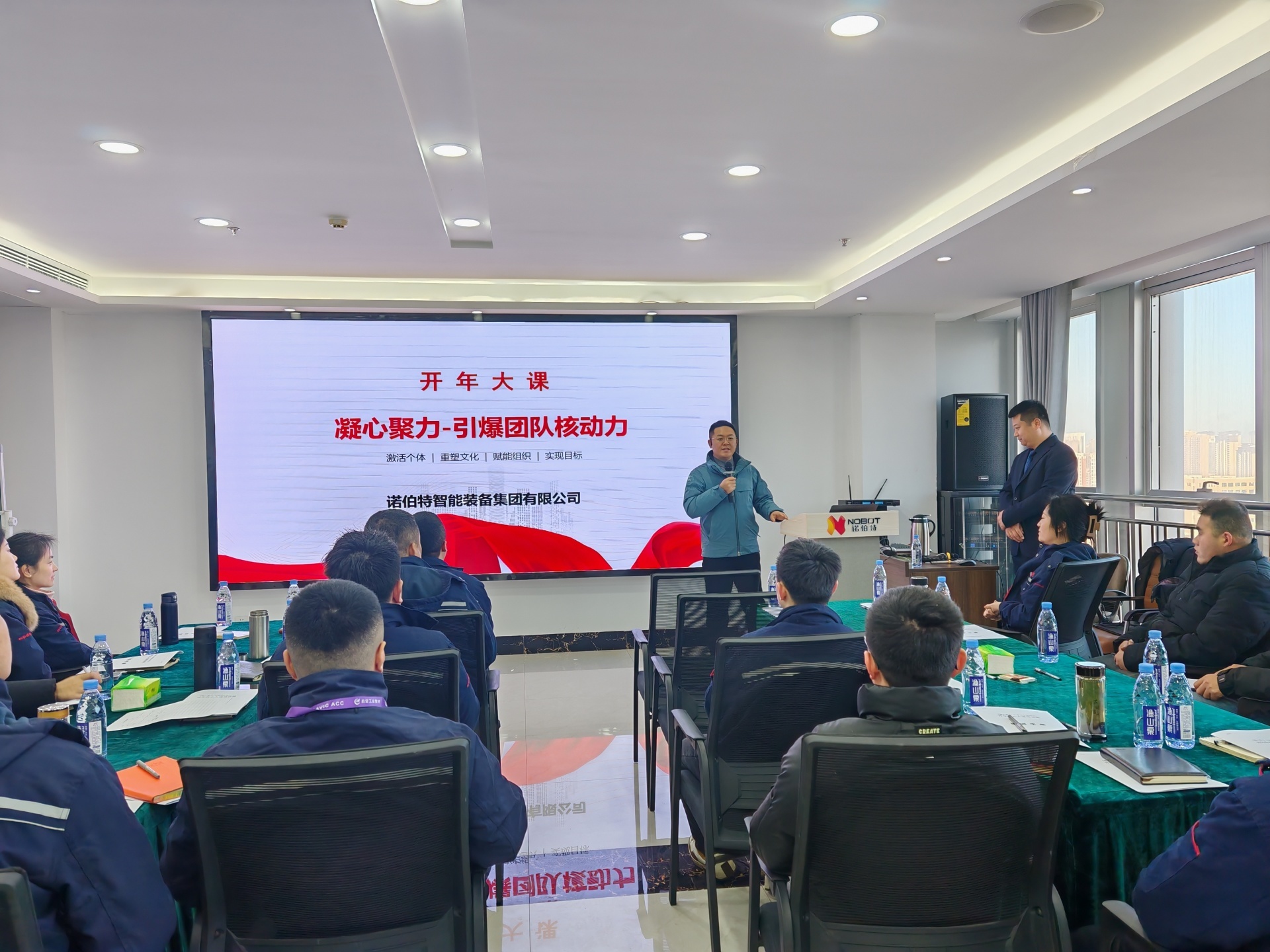
Nobot Group's 2025 Kick-off Event: A Team Building Activity Focused on Unity and Power
This opening ceremony was both a knowledge-boosting session, allowing employees to continuously grow through learning, and a team-building event, bringing everyone closer together. It impressed upon each employee that in today's increasingly competitive market, only by continuously learning new knowledge, daring to innovate, and maintaining teamwork can we remain undefeated. With the collective efforts of all employees, Nobot will surely ride the waves and achieve even greater success on this new journey, steadily advancing towards higher goals!
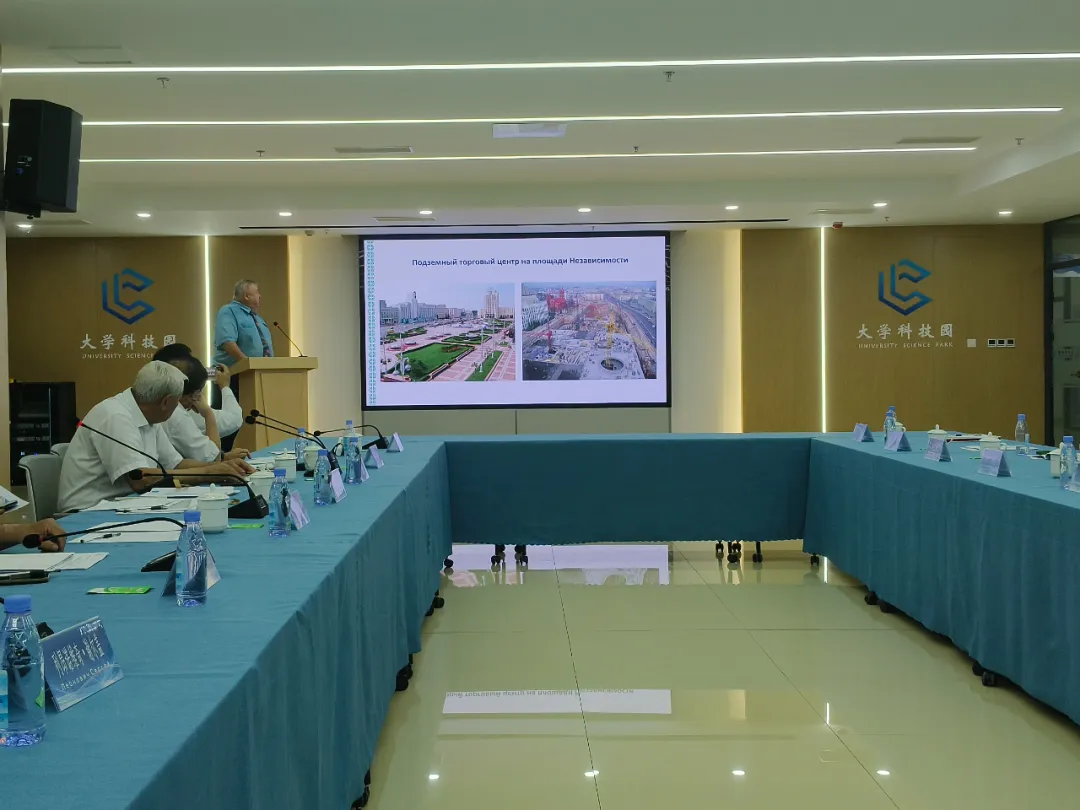
Nobot was invited to attend the Belt and Road International Exchange Conference
On July 28, 2024, the 2024 Liaocheng "Belt and Road" International Exchange Conference and the Unveiling Ceremony of the Central Asia International High-end Talent Joint Training Base were held in the Liaocheng High-tech Zone University Science and Technology Park. Professor Tursunbayev Zaporotot, President of Osh Technological University of the Kyrgyz Republic and corresponding academician of the Kyrgyz Academy of Engineering, and Academician Smaylor Erta of the Kyrgyz Academy of Engineering and the Russian Academy of Natural Sciences, among other experts and scholars from "Belt and Road" countries, participated in the event. Liaocheng Deputy Mayor Wang Gang and Zhang Ya, Party Secretary and Director of the Management Committee of the High-tech Zone, attended the event and delivered speeches.
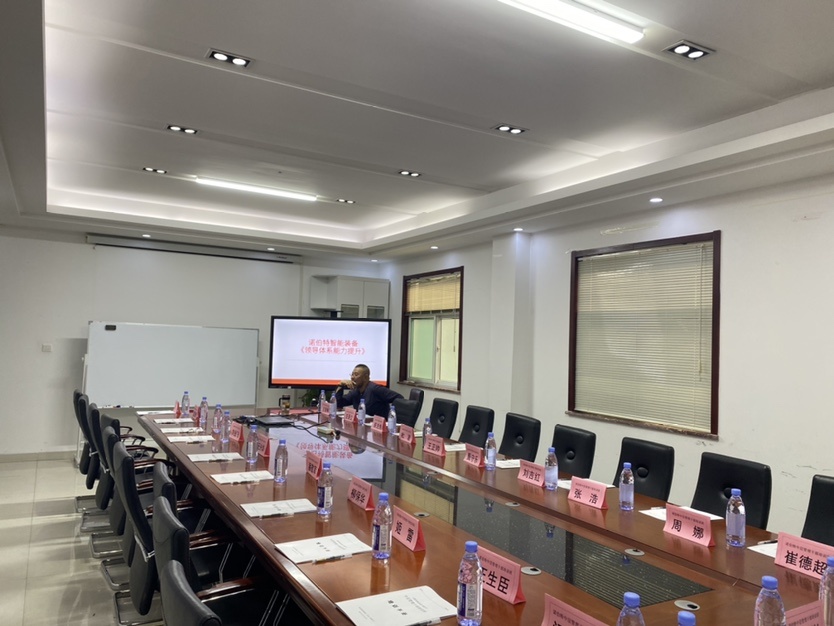
This training event not only provided a valuable learning opportunity for company managers and key personnel, but also built a platform for communication and sharing. During the training, everyone actively interacted and discussed enthusiastically, exploring effective ways to improve management capabilities together. Through this training, everyone has gained rich knowledge and skills, but more importantly, it has inspired confidence and motivation for the future.
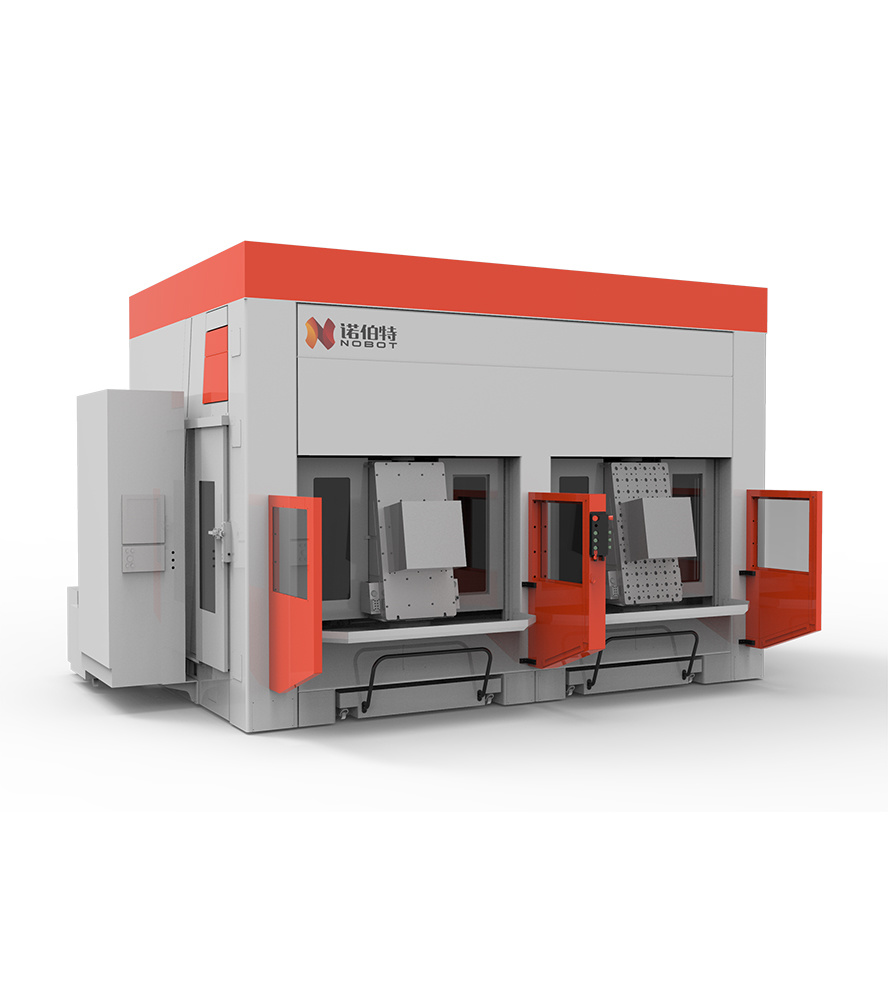
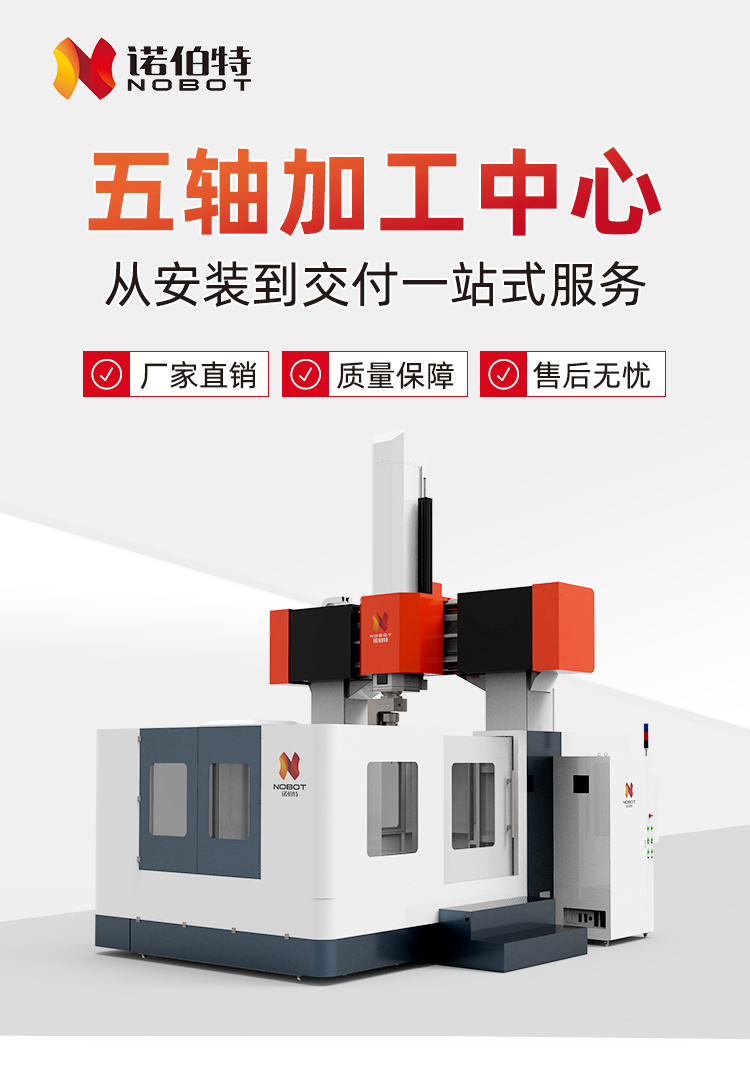
How to use a five-axis machining center efficiently? Today, let's learn a few practical steps!
When using a five-axis machining center, the equipment must first be adjusted to ensure that the workpiece and fixture dimensions precisely match, and that the zero points of each axis are accurately adjusted.
Why do composite materials require 5-axis CNC machining?
Composite materials are widely used in various fields such as aerospace, automotive, construction, energy, energy storage, infrastructure, marine, pipelines and tanks, sports and entertainment, and transportation due to their light weight, high fatigue resistance, and strong fracture resistance. Among them, aerospace and automotive industries are the largest application markets for composite materials. Five-axis CNC plays an important role in the processing of composite materials. Why do composite materials need to be processed using five-axis CNC?
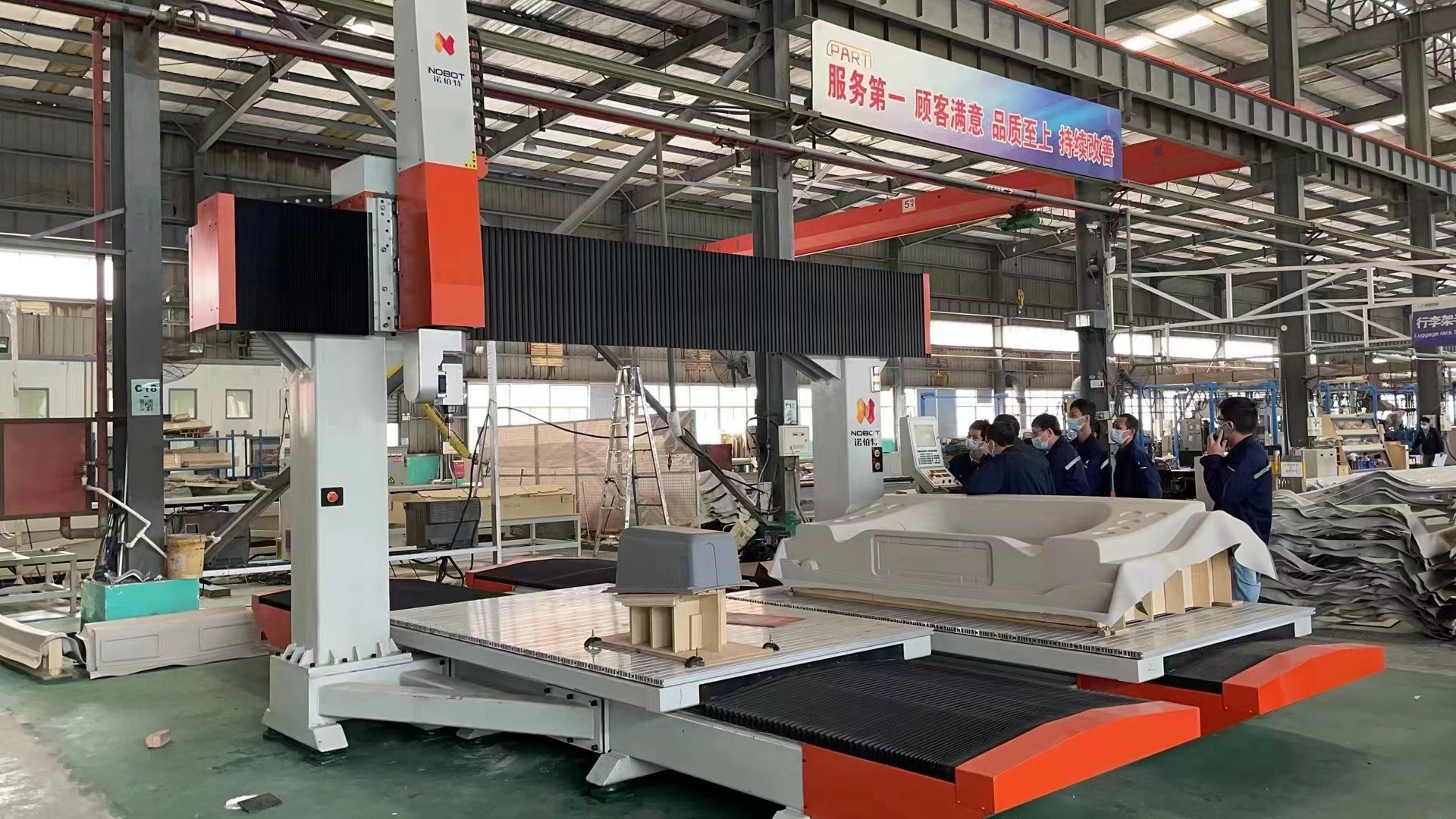
Dual-station five-axis machines offer several significant advantages. First, while one station is being machined, the other can be used for material loading and unloading, ensuring continuous, non-stop machining and significantly improving production efficiency. Second, the dual-station design makes operation more convenient and reduces waiting time. However, dual-station five-axis machines typically cost more than single-station machines and may require more operating and maintenance space.
Nobot Intelligent Equipment Group Co., Ltd.
Pre-sales consultation:86-635-2932233
Fax:86-635-2945333
After-sales consultation:86-635-5086881 / 86-635-2936881
National unified service hotline:86-400-823-3356
Email:nuobote@nobot.cc
Address: No. 1 Plant, No. 88 Huanghe Road, Gaoxin District, Liaocheng City, Shandong Province

copyright © 2025 Nobot Intelligent Equipment Group Co., Ltd.