

-
-
-
Application

-
-
-
-
Service
Industry 4.0, six levels of heaven
Published Time:
Oct 23,2018
When the first bottle reached the filling station, it informed the central control room's controller via wireless communication through a QR code that Zhang San preferred a sweeter drink and requested more sugar. The controller then instructed the filling machine, "Add two kilograms of sugar!" (Zhang San is really unlucky...). The second bottle came along and said that Li Si had diabetes and didn't want any sugar. The controller then told the machine, "This one doesn't need sugar!"
Industry 4.0 was first proposed by Germany. Germany called Industry 4.0 ,the United States called Industrial Internet, and our Ministry of Industry and Information Technology calls it the integration of industrialization and informatization. Made in China 2025 ,and the die-hard fans of the Internet of Things call it the Internet of Everything.
The United States has the world's leading Internet technology, so Americans hope to reduce the dimension from the informatization layer to automation layer , called the Industrial Internet ; while Germany has the strongest mechanical manufacturing industry, so it hopes to upgrade from the automation layer to the informatization layer , so it is called Industry 4.0 ; And we China, the world's largest manufacturing country and the second largest Internet power, does not want to follow either, intending to develop its own Internet +,also is Made in China 2025.
There is an industrial Internet media person named Tu Ge online who wrote a down-to-earth article introducing what Industry 4.0 really is. The article is easy to understand but a bit long. Today, Xiao Nuo will excerpt an interesting statement for everyone to appreciate.

Industry 4.0 First Heaven, Intelligent Production
Production equipment and management information systems are also connected to each other, and the equipment and information systems are also connected. Don't you think something is missing? Yes, the raw materials and production equipment for production have not yet been connected.
At this time, we need something called RFID, radio frequency identification technology. I guess you don't understand. Simply put, this thing is equivalent to a QR code, which can carry some information. It is better than a QR code because it can communicate wirelessly.
Let me describe a scenario. In PepsiCo's production workshop, three bottles pass through the production line continuously, each with a QR code recording that this is a customized cola for Zhang San, Li Si, and Wang Ermazi.
When the first bottle reaches the filling point, it tells the controller in the control room through the wireless communication of the QR code that Zhang San likes it sweeter and adds more sugar, and then the controller tells the filling robot, “Add two kilograms of white sugar!” (Zhang San is really unlucky…)
The second bottle comes, saying that Li Si has diabetes and doesn't want sugar, so the controller tells the robot, “This guy doesn't want sugar!”
The third bottle comes, saying that Wang Ermazi wants Fanta, so the controller tells the cola filling robot “Take a break”, and then tells the Fanta filling robot, “You're on!”
See, multi-variety, small-batch, customized production. From the moment you place an order online, each bottle of cola is customized for you, and all its characteristics meet your preferences.
This is intelligent production.

Industry 4.0 Second Heaven, Intelligent Products
The production process has been intelligent, so industrial products as finished products can also be intelligent. This is not difficult to understand. You have seen smart bracelets, smart bicycles, smart running shoes, etc. Smart hardware are all based on this idea. That is, the product is used as a data acquisition terminal, continuously collecting user data and uploading it to the cloud for user management.
US and German industry One of the core differences between 4.0 and the Industrial Internet is whether to do it first smart factory , or smart products first. Germany hopes for the former, while the United States hopes for the latter. As for China, we will do both, and it's better to add this thing, whether it's positive or negative.

Industry 4.0 Second Heaven, Service Production
As mentioned earlier, intelligent products will continuously collect user data and status and upload it to the manufacturer, which makes a new business model possible: charging for services. Many years ago when I was at Siemens, Siemens proposed charging for services. At that time, I thought this was a stupid × decision made by the Germans, but now I understand that this was a layout for the service production of Industry 4.0 that began many years ago. What is your impression of Siemens? Refrigerators? You fool, Siemens has quietly acquired many famous software companies in recent years, becoming the second largest software company in Europe after SAP.
What is this service? For example, Siemens produces a high-speed rail traction motor In the past, it was just selling a motor. Now, this motor will continuously transmit data back to Siemens' factory during operation, so Siemens knows the current operating status of your motor and when it needs maintenance. How did high-speed rail manufacturers do it in the past? A one-size-fits-all approach, setting a time, and repairing it regardless of whether it needs to be repaired or not, similar to our car maintenance. Now Siemens can tell you when you need to repair and maintain it. If you want to know, sorry, pay.
To give another example, after the implementation of intelligent products, each car will continuously collect surrounding data to determine its driving route, and the entire transportation system will be completely service-oriented. No one needs to buy a car anymore. One day, driving yourself may become a serious illegal act because the equipment is intelligent, but people are uncontrollable.
At this stage, all manufacturers will transform into service providers.
Industry 4.0 Fourth Heaven, Cloud Factory
When the two-way integration of factories is further deepened, another new business model will be born, which is the cloud factory.
The equipment in the factory is now also intelligent, and they are also continuously collecting their own data and uploading it to the industrial Internet. At this time, we can see which factories' production lines are operating at full capacity and which ones are idle. Then, these idle factories can sell their production capacity to produce for others who need it.
The internet industry's rapid development is due to entrepreneurs focusing solely on product and model innovation, without the need to purchase servers; they simply rent cloud services. However, industrial entrepreneurs still grapple with the decision of OEM outsourcing versus building their own factories, significantly hindering innovation in the industrial sector. Once cloud factories become a reality, I predict that China's industrial sector will experience an innovation and entrepreneurial boom exceeding that of the internet by a hundredfold. This will profoundly change society.
Industry 4.0 Fifth Heaven, Cross-border Strike
The internet industry constantly talks about dimensionality reduction strikes against traditional industries, mentioning companies like Google, Xiaomi, Alibaba, and LeEco. However, I tell you, when Industry 4.0 enters its fifth heaven, the cross-border strikes by industrial enterprises will be a hundred times more intense than those of internet companies. This process will fundamentally shake the foundations of modern economics and management, reshaping the entire business world.
For example, a watch manufacturer's product is worn daily, collecting the wearer's physiological data. While this data may be useless to the manufacturer, it's a goldmine for insurance companies. In this scenario, the watch manufacturer could easily transform into a top-tier insurance provider.
When automation deeply integrates with information technology, cross-border competition will become the norm, and all business models will be reshaped.

Industry 4.0 Great Perfection, The Matrix
The entire industrial 4.0 process is one of continuous integration of automation and information technology, and also a process of redefining the world with software.
In the future, the multiverse will become a reality in the virtual world, with one real world corresponding to countless virtual worlds. Changing the real world will change the virtual world; changing the virtual world will also change the real world. Everything is precisely controlled based on data, and most of humanity's physical and mental labor will be replaced by machines and artificial intelligence, rendering current economic principles obsolete.
BLOGS
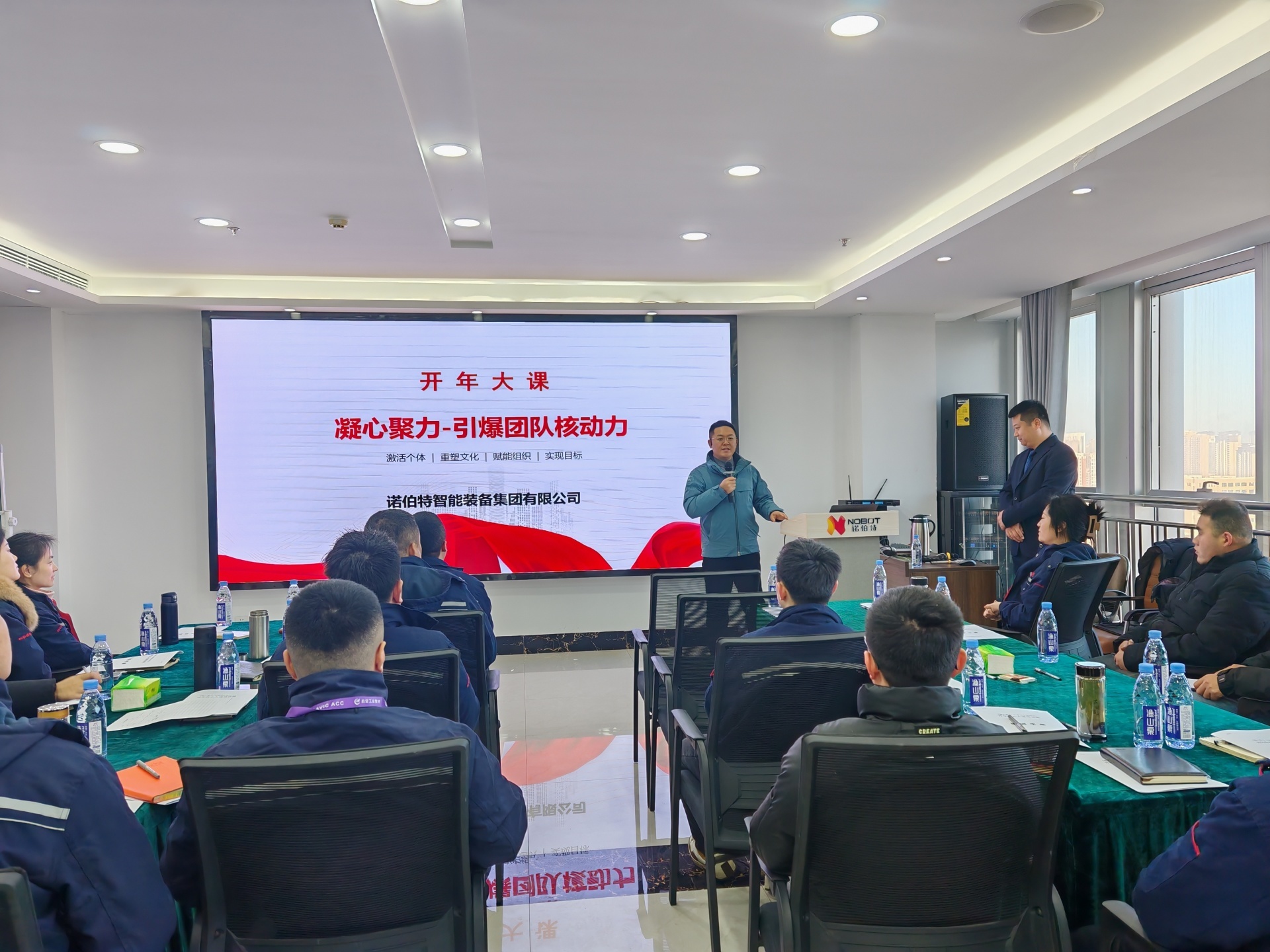
Nobot Group's 2025 Kick-off Event: A Team Building Activity Focused on Unity and Power
This opening ceremony was both a knowledge-boosting session, allowing employees to continuously grow through learning, and a team-building event, bringing everyone closer together. It impressed upon each employee that in today's increasingly competitive market, only by continuously learning new knowledge, daring to innovate, and maintaining teamwork can we remain undefeated. With the collective efforts of all employees, Nobot will surely ride the waves and achieve even greater success on this new journey, steadily advancing towards higher goals!
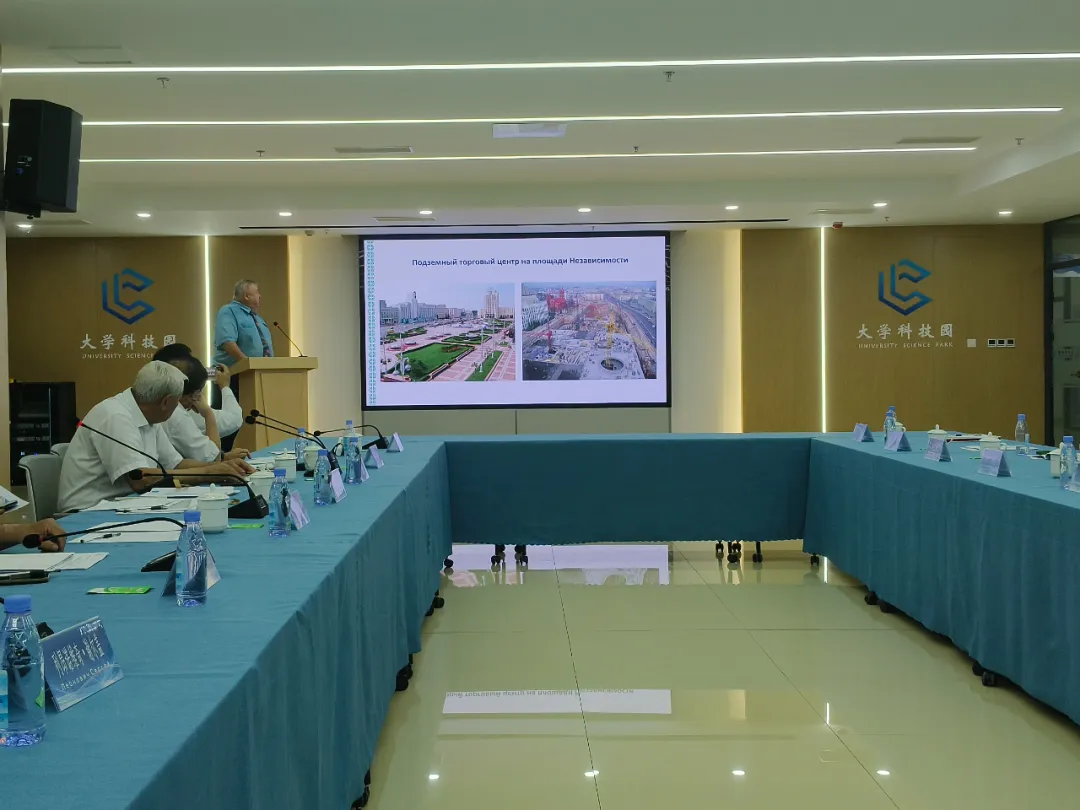
Nobot was invited to attend the Belt and Road International Exchange Conference
On July 28, 2024, the 2024 Liaocheng "Belt and Road" International Exchange Conference and the Unveiling Ceremony of the Central Asia International High-end Talent Joint Training Base were held in the Liaocheng High-tech Zone University Science and Technology Park. Professor Tursunbayev Zaporotot, President of Osh Technological University of the Kyrgyz Republic and corresponding academician of the Kyrgyz Academy of Engineering, and Academician Smaylor Erta of the Kyrgyz Academy of Engineering and the Russian Academy of Natural Sciences, among other experts and scholars from "Belt and Road" countries, participated in the event. Liaocheng Deputy Mayor Wang Gang and Zhang Ya, Party Secretary and Director of the Management Committee of the High-tech Zone, attended the event and delivered speeches.
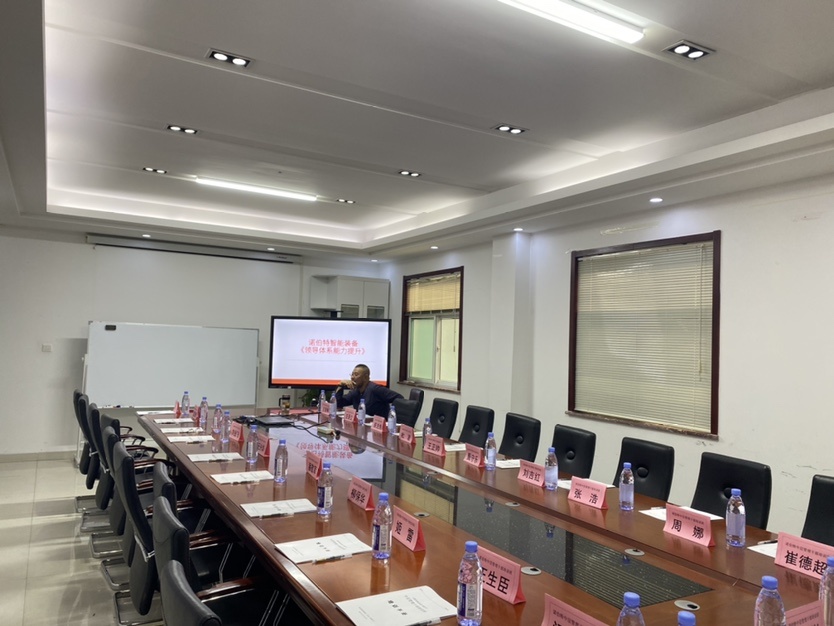
This training event not only provided a valuable learning opportunity for company managers and key personnel, but also built a platform for communication and sharing. During the training, everyone actively interacted and discussed enthusiastically, exploring effective ways to improve management capabilities together. Through this training, everyone has gained rich knowledge and skills, but more importantly, it has inspired confidence and motivation for the future.
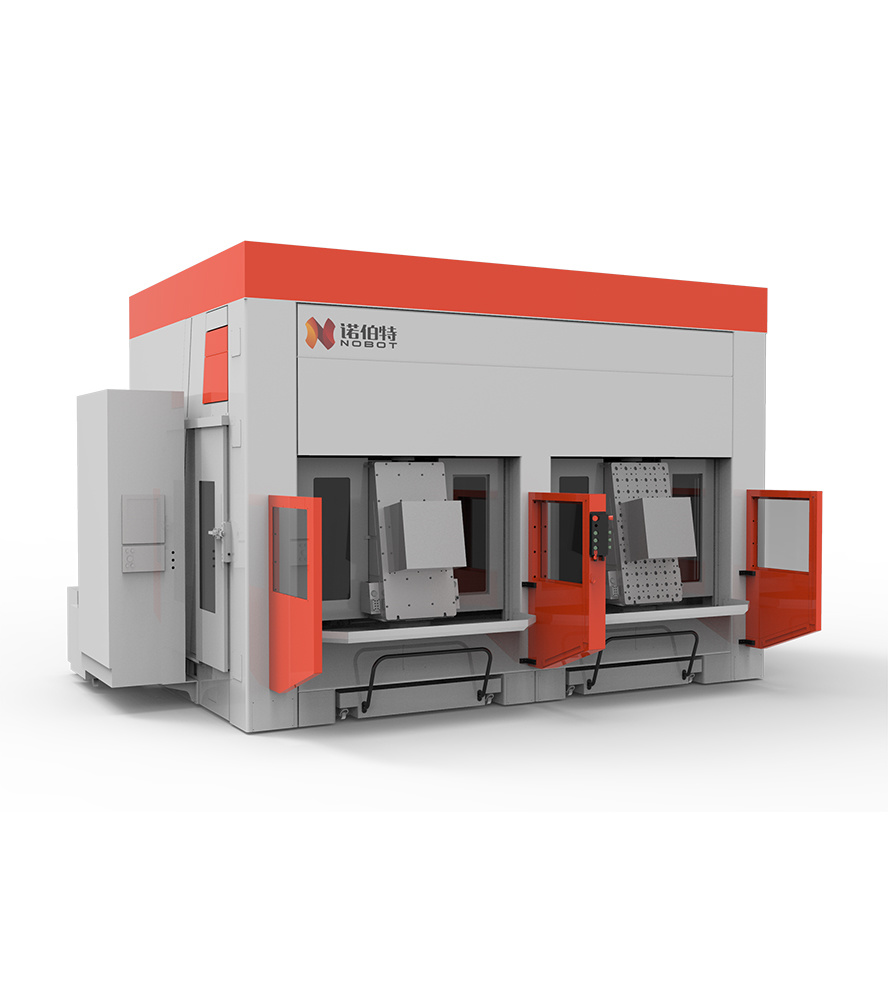
How to use a five-axis machining center efficiently? Today, let's learn a few practical steps!
When using a five-axis machining center, the equipment must first be adjusted to ensure that the workpiece and fixture dimensions precisely match, and that the zero points of each axis are accurately adjusted.
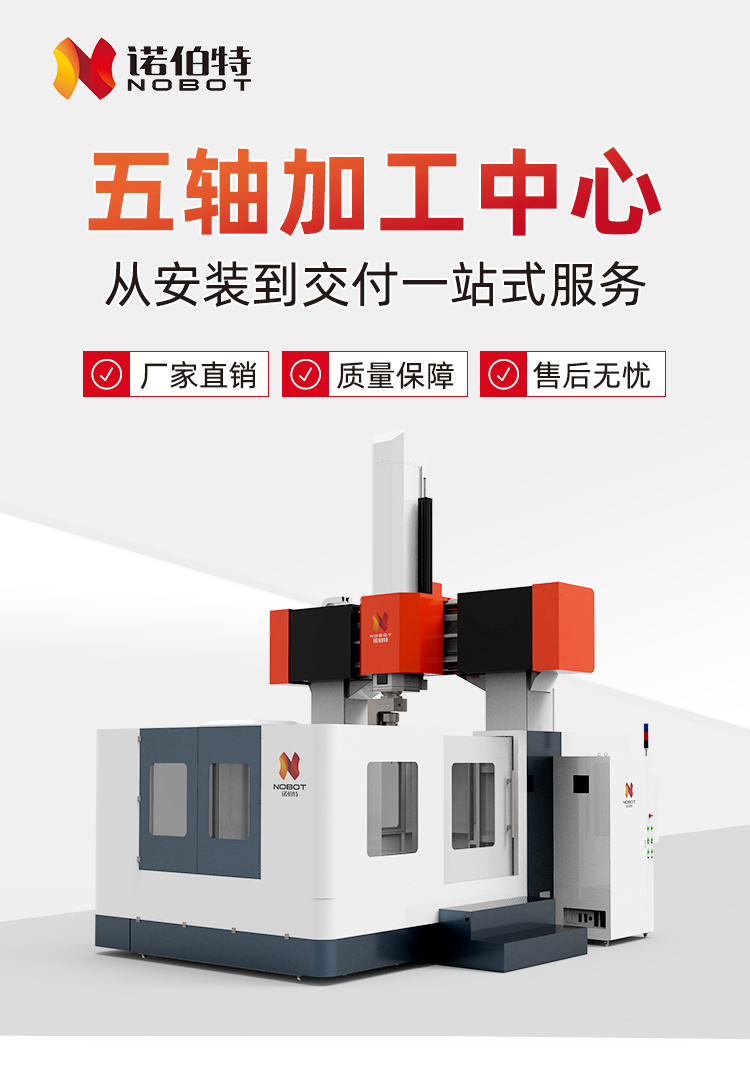
Why do composite materials require 5-axis CNC machining?
Composite materials are widely used in various fields such as aerospace, automotive, construction, energy, energy storage, infrastructure, marine, pipelines and tanks, sports and entertainment, and transportation due to their light weight, high fatigue resistance, and strong fracture resistance. Among them, aerospace and automotive industries are the largest application markets for composite materials. Five-axis CNC plays an important role in the processing of composite materials. Why do composite materials need to be processed using five-axis CNC?
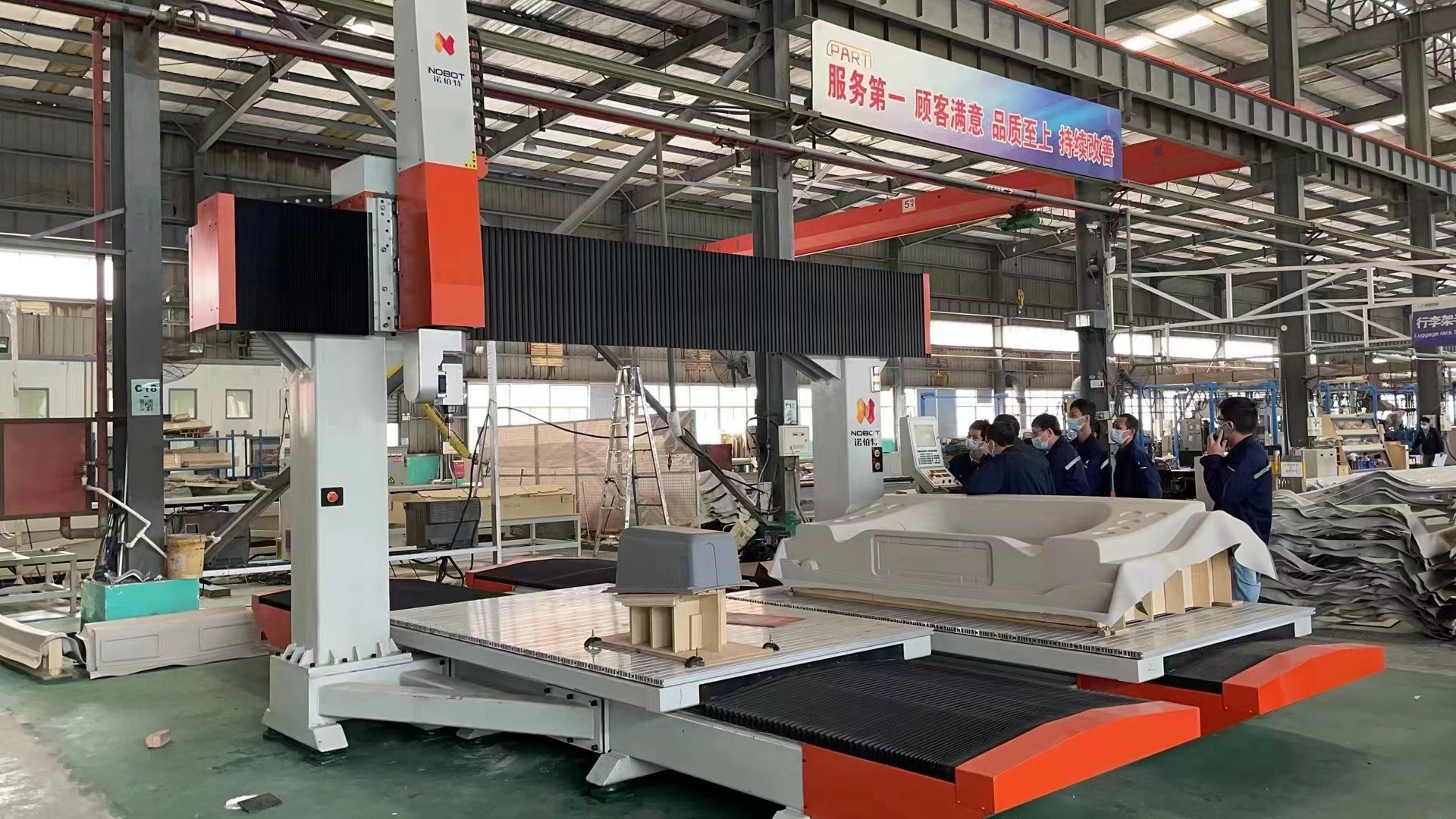
Dual-station five-axis machines offer several significant advantages. First, while one station is being machined, the other can be used for material loading and unloading, ensuring continuous, non-stop machining and significantly improving production efficiency. Second, the dual-station design makes operation more convenient and reduces waiting time. However, dual-station five-axis machines typically cost more than single-station machines and may require more operating and maintenance space.
Nobot Intelligent Equipment Group Co., Ltd.
Pre-sales consultation:86-635-2932233
Fax:86-635-2945333
After-sales consultation:86-635-5086881 / 86-635-2936881
National unified service hotline:86-400-823-3356
Email:nuobote@nobot.cc
Address: No. 1 Plant, No. 88 Huanghe Road, Gaoxin District, Liaocheng City, Shandong Province

copyright © 2025 Nobot Intelligent Equipment Group Co., Ltd.