

-
-
-
Application

-
-
-
-
Service
Are forklifts or stackers used in your warehouse? How should enterprises choose the right warehouse racking system?
Published Time:
Dec 07,2021
Generally, companies of a certain scale will need to equip corresponding transfer equipment when introducing shelves. However, the operating environment and use of warehousing vary, so the choice between forklifts and stacker cranes cannot be arbitrary.
Warehouse racking is one of the main pieces of equipment used for storing goods in warehouses, but racking alone is insufficient for storing and retrieving goods; other related equipment is needed to complete the entire process of bulk goods storage and retrieval. Forklifts and stacker cranes are the main commonly used handling equipment. Generally, enterprises of a certain scale will equip corresponding transfer equipment when introducing racking. However, the operating environment and purposes of warehouses vary, so the choice between forklifts and stacker cranes cannot be arbitrary.

The selection of equipment primarily requires understanding its attributes and application scale.
What is a stacker crane? A stacker crane is a hoisting device specifically used for storing and retrieving goods in warehouses. In automated high-bay warehouse systems, stacker cranes are indispensable mechanical equipment. Simply put, a stacker crane is a goods handling device. Stacker cranes and racks are freely assembled and move according to computer instructions. Through the lifting system, they can store and retrieve goods very quickly, thereby improving the efficiency of automated high-bay warehouses. Stacker cranes are a derivative of automated high-bay warehouses, and there are many types of stacker cranes, such as suspended type, ground-supported type, etc. There are some differences between different cranes, but the ultimate goal of all stacker cranes is to achieve the function of goods storage.

Its primary function is to operate back and forth in the aisles of an intelligent high-bay warehouse, storing goods located at the aisle entrance into storage locations or retrieving goods from storage locations and transporting them to the aisle entrance. This is a relatively fixed-path operating device. Obviously, this storage and retrieval equipment is relatively advanced warehousing equipment. To fully utilize its effectiveness, standardized layout of racking, etc., and coordination of various control systems are required.
Forklifts, racking, and pallets are known as the "warehouse three brothers," which shows the importance of forklifts in warehouse systems. China began manufacturing forklifts in the early 1950s. With the rapid development of the Chinese economy, material handling in most enterprises has moved away from primitive manual handling and has been replaced by mechanized handling, mainly using forklifts. Therefore, for a considerable period of time in the past, the demand for the Chinese forklift market has grown at a double-digit rate annually.
Forklifts are designed for handling goods and short-distance transportation. The main lifting device is the fork, and various types of attachments can be equipped. Forklifts are most suitable for operation on smooth, hard surfaces (asphalt, cement, etc.). They are used in warehouses, railway stations, docks, construction sites, etc., for loading, unloading, or stacking operations, reducing the workload of personnel and improving loading and unloading efficiency.

Forklifts are divided into two categories according to their product structure: one is mechanical transmission forklifts, including counterbalanced forklifts with gasoline engines and counterbalanced forklifts with diesel engines; the other is hydraulic transmission forklifts, which refer to converting engine work into hydraulic energy through a torque converter. Forklifts are divided into three types according to their power mechanism: diesel engine forklifts, gasoline engine forklifts, and liquefied petroleum gas engine forklifts.
From the brief introduction of stacker cranes and forklifts above, their respective advantages and characteristics can be seen. Stacker cranes have a high degree of automation and, in conjunction with WMS and other systems, are highly efficient in goods handling. However, they require the storage locations and aisles of the high-bay racking to be compatible with the stacker crane to ensure efficient goods storage.
Compared with stacker cranes, forklifts are more flexible. They move on wheels, reaching each storage area of the racking to store and retrieve goods. As long as the appropriate width is designed, most goods racking storage and retrieval work can be handled. However, forklifts require human operation, and forklift operators must undergo formal training. In terms of safety, stacker cranes have an advantage.
Attachment: Conditions required to operate a forklift:
1. Applicants for the special equipment operator's certificate for forklift operation must be over 18 years of age;
2. Be in good health and meet the special physical requirements for the type of forklift operation applied for;
3. Have an educational level suitable for the type of forklift operation applied for;
4. Have work experience suitable for the type of forklift operation applied for;
5. Possess the corresponding safety technical knowledge and skills for forklift operation;
6. Meet other requirements stipulated in the safety technical specifications for forklift operators.
In terms of price, stacker cranes are high-end, advanced, automated storage equipment, and their manufacturing and procurement costs are higher than those of forklifts. However, with the development of enterprise warehousing systems, stacker cranes are indispensable equipment in future warehousing systems. If the enterprise has sufficient budget, the use of stacker cranes can be considered. After all, current stacker cranes are system-controlled and have unparalleled advantages in safety, energy saving, and efficiency compared to forklifts. Currently, for small and medium-sized enterprises, the combination of forklifts and stacker cranes is the ideal choice.
If the above content has not fundamentally solved your doubts, the best way is to consult relevant enterprises, such as manufacturers of intelligent high-bay warehouses. Because they frequently undertake various projects, they are certainly more familiar with this aspect of configuration. Nobot Intelligent Equipment (Shandong) Co., Ltd. provides you with high-quality warehousing systems. Welcome customers to inquire. Telephone: 86-635-2932233 4008233356 Website: www.nobot.cc Official WeChat: nobot-6881. Nobot's self-developed fully automatic stacker crane is equipped with an intelligent system, load protection system, dual-closed-loop control system, etc., to achieve safer, more efficient, and precise positioning operations, ensuring the safety of goods throughout the warehousing process and facilitating overall system optimization.
BLOGS
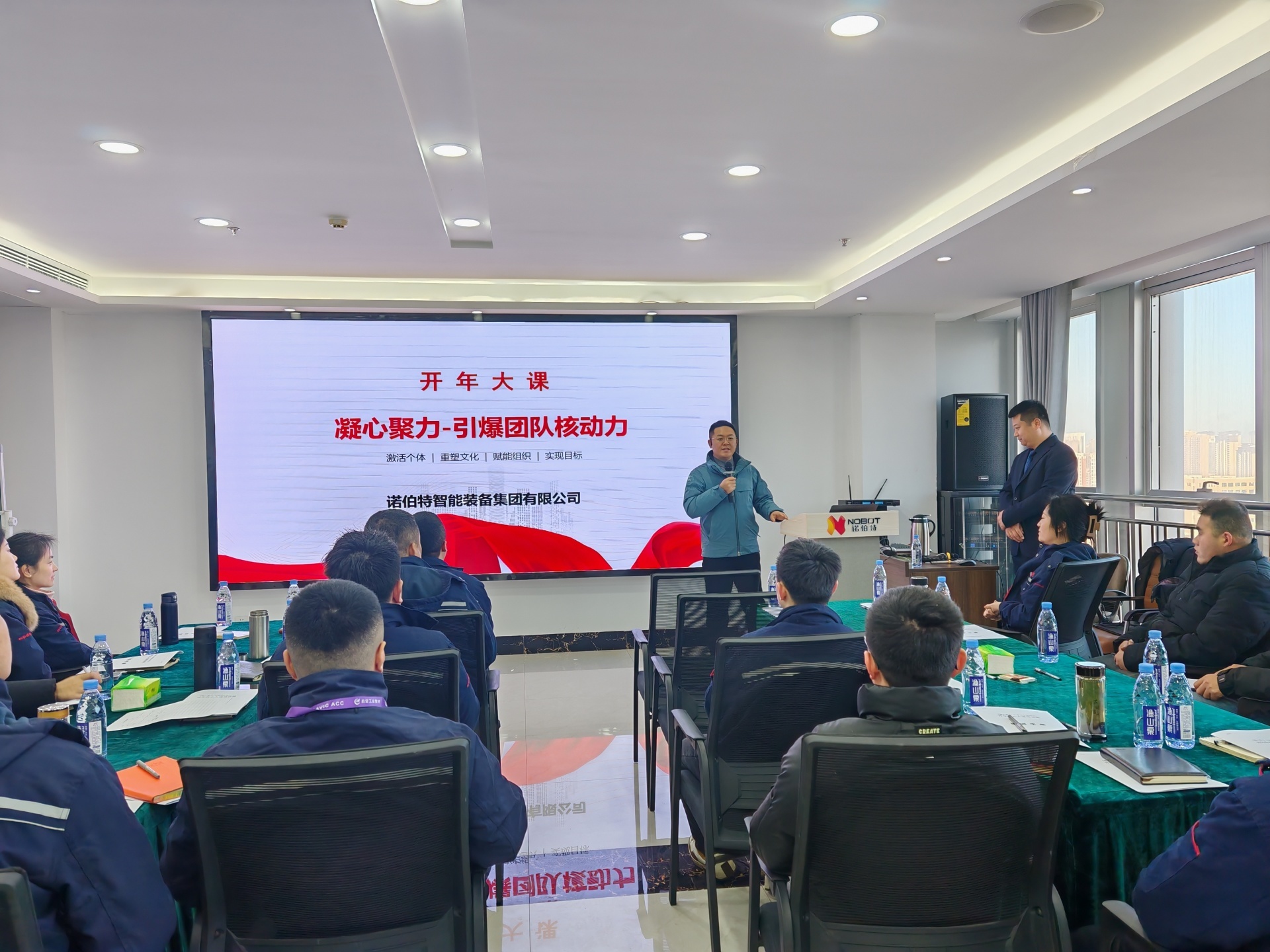
Nobot Group's 2025 Kick-off Event: A Team Building Activity Focused on Unity and Power
This opening ceremony was both a knowledge-boosting session, allowing employees to continuously grow through learning, and a team-building event, bringing everyone closer together. It impressed upon each employee that in today's increasingly competitive market, only by continuously learning new knowledge, daring to innovate, and maintaining teamwork can we remain undefeated. With the collective efforts of all employees, Nobot will surely ride the waves and achieve even greater success on this new journey, steadily advancing towards higher goals!
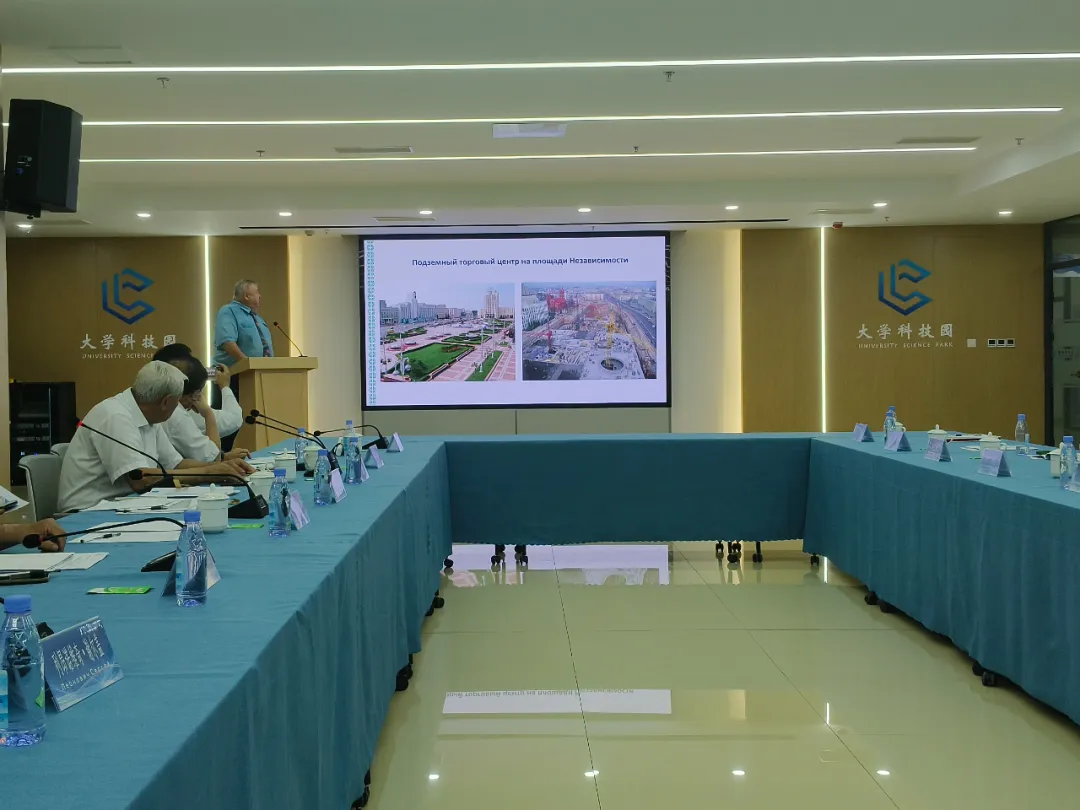
Nobot was invited to attend the Belt and Road International Exchange Conference
On July 28, 2024, the 2024 Liaocheng "Belt and Road" International Exchange Conference and the Unveiling Ceremony of the Central Asia International High-end Talent Joint Training Base were held in the Liaocheng High-tech Zone University Science and Technology Park. Professor Tursunbayev Zaporotot, President of Osh Technological University of the Kyrgyz Republic and corresponding academician of the Kyrgyz Academy of Engineering, and Academician Smaylor Erta of the Kyrgyz Academy of Engineering and the Russian Academy of Natural Sciences, among other experts and scholars from "Belt and Road" countries, participated in the event. Liaocheng Deputy Mayor Wang Gang and Zhang Ya, Party Secretary and Director of the Management Committee of the High-tech Zone, attended the event and delivered speeches.
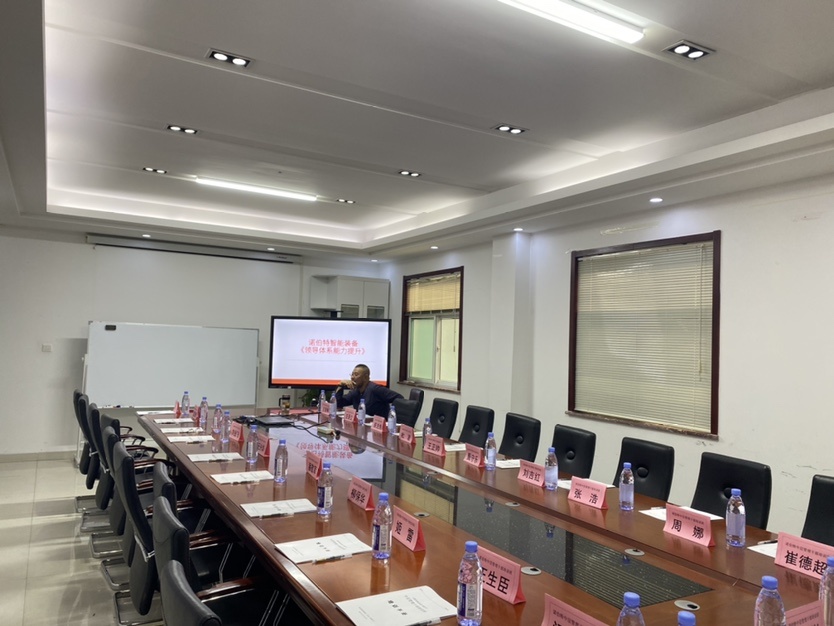
This training event not only provided a valuable learning opportunity for company managers and key personnel, but also built a platform for communication and sharing. During the training, everyone actively interacted and discussed enthusiastically, exploring effective ways to improve management capabilities together. Through this training, everyone has gained rich knowledge and skills, but more importantly, it has inspired confidence and motivation for the future.
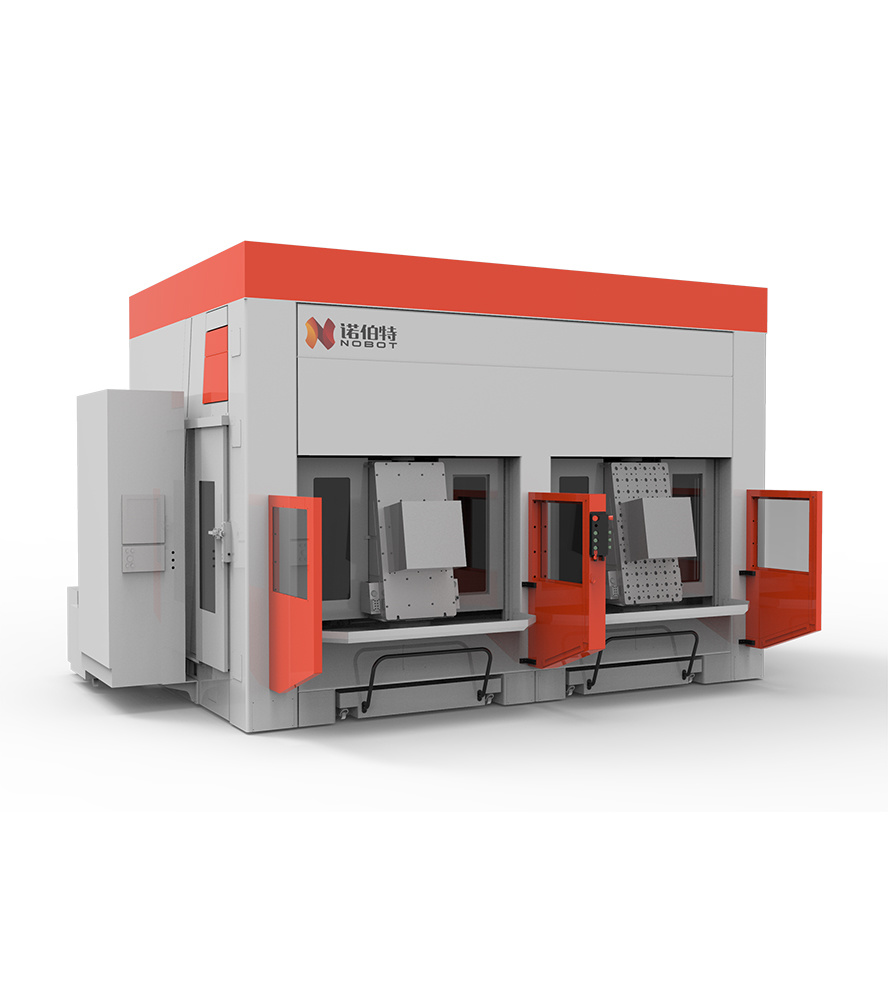
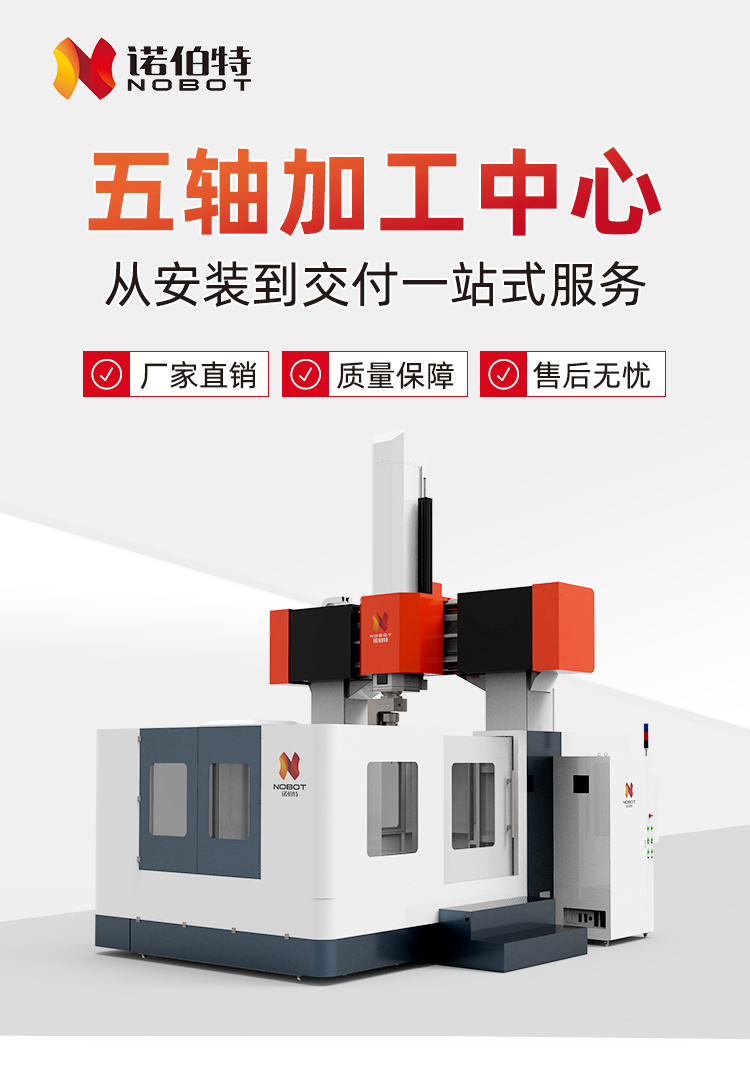
How to use a five-axis machining center efficiently? Today, let's learn a few practical steps!
When using a five-axis machining center, the equipment must first be adjusted to ensure that the workpiece and fixture dimensions precisely match, and that the zero points of each axis are accurately adjusted.
Why do composite materials require 5-axis CNC machining?
Composite materials are widely used in various fields such as aerospace, automotive, construction, energy, energy storage, infrastructure, marine, pipelines and tanks, sports and entertainment, and transportation due to their light weight, high fatigue resistance, and strong fracture resistance. Among them, aerospace and automotive industries are the largest application markets for composite materials. Five-axis CNC plays an important role in the processing of composite materials. Why do composite materials need to be processed using five-axis CNC?
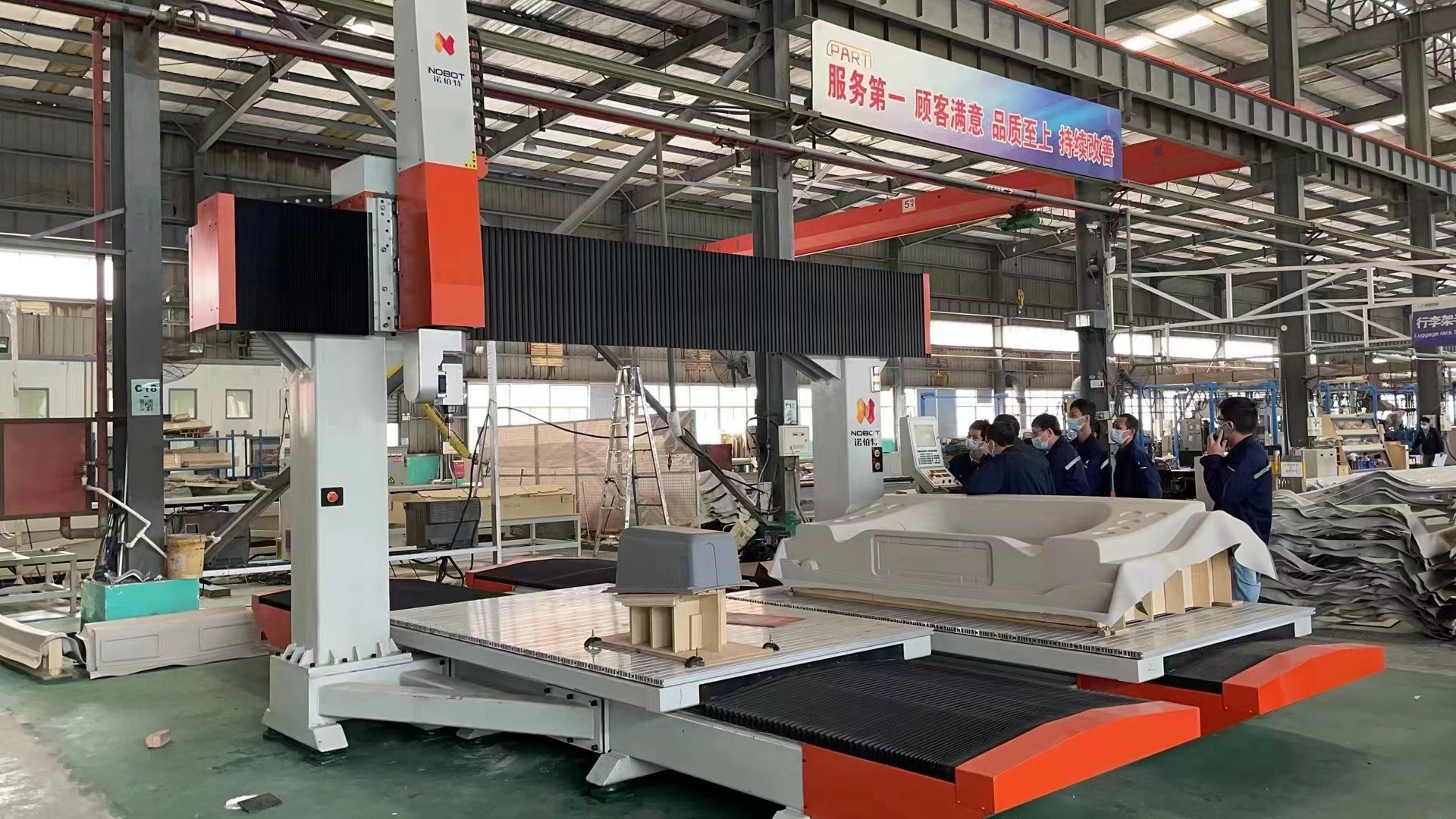
Dual-station five-axis machines offer several significant advantages. First, while one station is being machined, the other can be used for material loading and unloading, ensuring continuous, non-stop machining and significantly improving production efficiency. Second, the dual-station design makes operation more convenient and reduces waiting time. However, dual-station five-axis machines typically cost more than single-station machines and may require more operating and maintenance space.
Nobot Intelligent Equipment Group Co., Ltd.
Pre-sales consultation:86-635-2932233
Fax:86-635-2945333
After-sales consultation:86-635-5086881 / 86-635-2936881
National unified service hotline:86-400-823-3356
Email:nuobote@nobot.cc
Address: No. 1 Plant, No. 88 Huanghe Road, Gaoxin District, Liaocheng City, Shandong Province

copyright © 2025 Nobot Intelligent Equipment Group Co., Ltd.